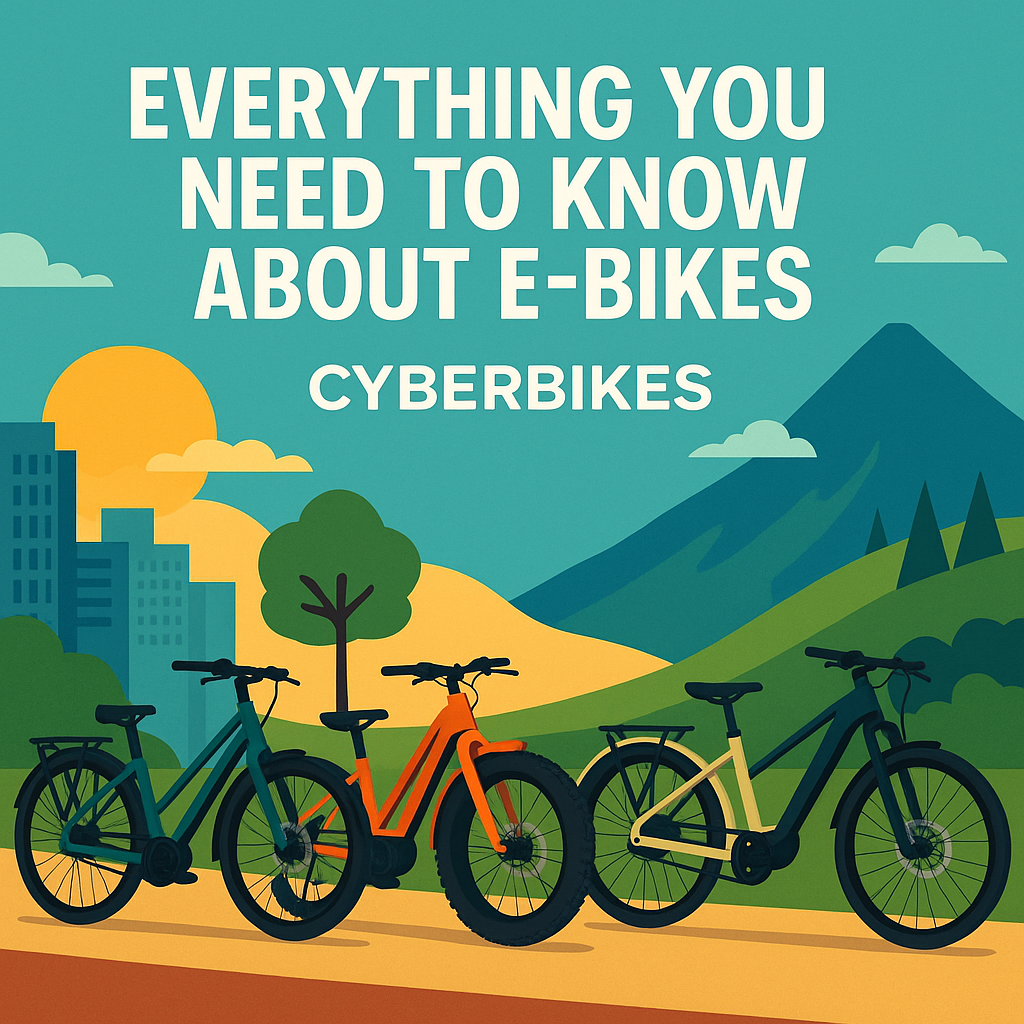
Electric bikes (e‑bikes) have moved from a niche curiosity to a mainstream transportation option. At Cyberbikes we’ve seen a huge surge in riders who want an efficient, eco‑friendly and fun way to move through their city or tackle off‑road adventures.
As head of the Cyberbikes Group, Felipe Rodrigues often reminds our community that an e‑bike isn’t just a powered bicycle – it’s a tool for freedom, health and sustainability. Below we answer the questions people around the world ask most often, drawing on our experience as riders and builders.
What is an e‑bike and how do they work?
An electric bicycle is a regular bicycle fitted with a battery and small motor that provide power when you pedal. Modern e‑bikes use sensors to measure how fast you’re pedalling or how much force you’re applying; this information lets the motor provide a level of assistance matched to your effort. Some models also feature a throttle that propels the bike without pedalling; these are usually Class 2 e‑bikes.
At Cyberbikes we favour pedal-assist (pedelec) systems for the way they keep you engaged with the ride, offering a natural boost that takes the sting out of hills and headwinds. Cadence-based sensors measure how fast you’re pedalling, while torque sensors respond to your effort for a smoother, more intuitive experience. We also support hand throttles, not just for convenience but as a practical safety feature — letting riders accelerate quickly through intersections or past parked cars without adjusting assist levels. Throttles reduce the strain of constant pedalling, helping prevent fatigue on longer rides or steep climbs, which in turn supports better control and safer riding.
How fast can an electric bike go?
Speed limits depend on where you live. In Australia, the EU and the UK, motor assistance must shut off at 25 km/h (15 mph)bikeradar.com. Once you reach that speed, you can still pedal faster using your own power. In the US some classes of e‑bikes can assist up to 32 km/h (20 mph)bikeradar.com. Be aware that bikes with higher‑powered motors or continuous throttle operation are legally considered mopeds or motorcycles and require licensing and insurancebikeradar.com.
Do I need to pedal? Do I need a licence?
A pedal‑assist e‑bike provides power only when you pedal and is classified as a bicycle, so you don’t need a driving licence in most countries. In Australia you can ride an e‑bike without a licence provided it delivers no more than 250W or 500W (NSW only) of continuous power and stops assisting at 25 km/h.
Bikes with a throttle (Class 2) allow you to ride without pedalling, but these may be restricted or banned on certain trails, bike paths and roads. Felipe frequently reminds customers that an e‑bike is still a bicycle: you need to use your legs! The assistance makes hills and headwinds far easier, but pedalling helps extend range and keeps your heart healthy.
How far can I ride and how long does a battery last?
Range depends on battery capacity, motor efficiency, terrain and how much assistance you use. Some commuting and cross‑country e‑bikes will cover up to 100 km on a single charge, while trekking models with dual batteries can reach 150 kmbikeradar.com.
If your rides are mostly short commutes or errands, a range of 50–60 km is usually sufficient. You’ll get the best results by choosing an assistance level appropriate for the terrain and keeping your tires inflated.
Lithium‑ion batteries typically last between 500 and 1 000 charge cycles before their capacity noticeably diminishes. Proper maintenance – such as charging fully before the first ride, not leaving the battery depleted and avoiding extreme temperatures – will extend lifespan.
What types and classes of e‑bikes exist?
E‑bikes come in a surprising variety:
Commuter/Urban: lightweight bikes designed for city roads, often with integrated lights and racks.
Cruiser: built for leisurely rides with upright seating and plush seats.
Fat‑tire: equipped with oversized tires and powerful motors for sand, snow or beach riding.
Cargo & Family: extended frames and cargo platforms make these a practical alternative to a car for carrying children or groceries.
Mountain (e‑MTB): designed for off‑road trails with suspension and responsive handling.
Gravel: versatile machines that balance road efficiency with light‑trail capability.
SUV: This was originated back in 2019 with the creation of the first sketches of the Cyberbikes Centauro. It’s an electric bike that mixes MTB, Commuter and Cargo models in one. This is the new trend in e-bikes world wide, being led by Cyberbikes!
E‑bike classes describe how they deliver power:
Class 1: pedal‑assist only, no throttle, motor cuts at 32 km/h (25 km/h in AU/EU).
Class 2: pedal‑assist with throttle, also limited to 32 km/h. (throttle 6km/h max.)
Class 3: pedal‑assist only but assists up to 45 km/h; these may require registration and are restricted from some paths.
Are e‑bikes heavy?
Electric bikes typically weigh 18–45 kg depending on design and components. Commuter and gravel models are usually at the lighter end for easier handling, while cargo and fat‑tire bikes weigh more because of their heavy‑duty frames and motors.
Felipe recommends identifying the rider(s) gender, size, and use possibilities. For example, understanding if the bike will be shared among family members or it will belong to a unique owner, can avoid you buying an e-bike that only the tallest male in the family can ride. Also the use case is important to consider, do not try to give your kids a ride to school on a folding compact e-bike, it will not bear the excessive load – a well‑balanced e-bike is the best for YOU!
How do I charge and care for my battery?
Charge your battery fully before your first ride. Most chargers indicate progress with a red‑to‑green light. A full charge typically takes 4–9 hours depending on battery size and charger speed (A/h).
Avoid leaving batteries plugged in for days on end; unplug once they reach 100 %. When storing your e‑bike for extended periods, keep the battery at around 50 % charge in a cool, dry place with temperature around 25 degrees Celsius.
Can I ride an e‑bike in the rain or off‑road?
Modern e‑bikes can handle light rain and wet conditions, but you should avoid deep water and heavy downpours. Water shouldn’t penetrate the Display/Screen, motor, battery, sensors and other electronics like GPS and USB ports. Use fenders, clean the bike after wet rides and dry off connectors.
Off‑road riding is entirely possible with the right bike: electric mountain bikes and fat‑tire bikes are built for rugged trails. Ensure your bike has appropriate tires, suspension and protection, and always respect trail rules.
Do I need a licence to ride an e‑bike?
In Australia you do not need a licence to ride a pedal‑assist e‑bike as long as it produces no more than 250 W of power and the motor stops assisting at 25 km/h. The same rules apply in the UK and most of Europe.
If the bike has a higher power rating or unlimited throttle, it may be classified as a moped and require registration and insurancebikeradar.com.
How much do electric bikes cost?
Prices vary depending on the components and features. A quality entry‑level e‑bike usually starts around A$1 500–2 000 (roughly US$1 000–1 500) and high‑end models with advanced motors, suspension and large batteries can cost A$7 000 or more.
While the initial investment is higher than a conventional bike, savings on fuel, parking and car maintenance mean an e‑bike often pays for itself over time.
How much maintenance does an e‑bike require?
E‑bikes benefit from the same care as regular bikes plus some extra attention for electrical components. Clean your bike regularly, keep the chain lubricated and the tires properly inflated, and check bolts and spoke tension. Inspect brake pads frequently – e‑bikes are heavier and wear brake components faster. Have your bike serviced by a professional at least once a year.
Battery care is crucial: keep contacts clean and dry, avoid extreme heat and never fully discharge the battery. Felipe emphasises that well‑maintained batteries and motors can last years and ensure a smooth ride.
Can I travel with my electric bike?
Travelling by car is straightforward; just ensure the bike rack can handle the extra weight. As a rule of thumb, if your bike rack states it can “carries two bicycles”, you could carry one e-bike. If it says “carries four bicycles” you can carry two e-bikes.
Air travel is more complex because most airlines restrict large lithium‑ion batteries. You may need to ship the battery separately or rent a battery at your destination. Always check your airline’s specific policies.
How do I choose the right e‑bike for me?
When Felipe helps customers choose a bike he looks at:
Purpose and terrain: commuting, touring, mountain trails or carrying kids/groceries.
Motor power: higher wattage for steep hills or heavy loads, but remember legal limits.
Range: match the battery’s range to your typical ride length.
Features: suspension, brakes, lighting and accessories you’ll actually use.
Fit and size: test ride several models to find the right frame size and geometry.
Budget: set a realistic budget and look for the best quality within that range.
At Cyberbikes we invite riders to test ride multiple models. You’ll quickly feel which bike suits your body and your mission.
Where can I buy an e‑bike?
You can purchase e‑bikes from specialist retailers, online stores or directly from manufacturers. Cyberbikes partners with leading manufacturers and offers a curated range that caters to commuters, families, adventurers and racers. Because we ride the bikes we sell, we provide honest advice and ongoing support.
Conclusion – join the Cyberbikes movement
The questions above are just the beginning of your e‑bike journey. Electric bikes are a transformative way to travel – efficient, sustainable and, above all, fun. By understanding how they work, what kind of bike suits your needs and how to care for it, you’ll maximise your enjoyment and investment.
At Cyberbikes we believe in empowering riders with knowledge and quality machines. Under Felipe Rodrigues’ leadership we focus on robust motors, long‑lasting batteries, intuitive designs and responsive service.
Whether you’re a curious newcomer or a seasoned rider, we invite you to visit our showroom, join our socials medias (links below), and experience the freedom of electric riding for yourself.