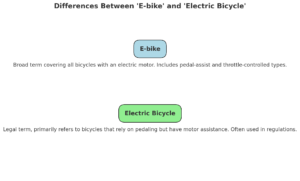
1. E-Bike (Electric Bike)
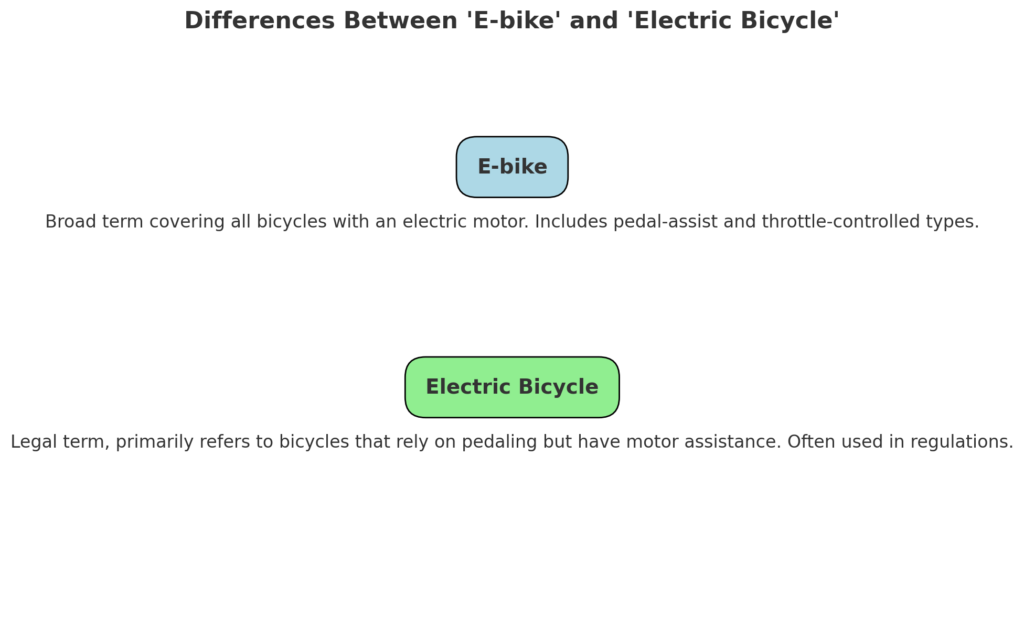
An e-bike is a broad term that refers to any bicycle with an integrated electric motor used to assist with propulsion. E-bikes generally fall into two categories:
- Pedal-Assist (Pedelec): The motor only activates when the rider is pedaling. These bikes help the rider, but the rider must still pedal for the motor to engage.
- Throttle-Controlled: The motor can provide power without pedaling. The rider can control the speed using a throttle, similar to a scooter or moped.
E-bikes often have additional features such as adjustable motor settings, and they can vary in power and speed.
2. Electric Bicycle
An electric bicycle is technically the same as an e-bike but is sometimes used to emphasize the fact that it’s a regular bicycle with electric assistance. This term is typically used in legal or regulatory contexts to ensure the distinction between electric bicycles and motor vehicles like scooters or mopeds.
In most cases, when people say electric bicycle, they are referring to:
- A bicycle with a motor that assists pedaling, but the primary mode of operation is still pedal power. These are often limited to certain power (e.g., 250W) and speed thresholds (e.g., 25 km/h) to meet legal definitions in many regions.
Key Differences:
- Terminology: “E-bike” is more informal and commonly used by riders and manufacturers, while “electric bicycle” is used more often in legal definitions and regulations.
- Focus: “Electric bicycle” emphasizes the bicycle aspect, highlighting that the bike is still primarily operated like a traditional bicycle but with electric assistance. “E-bike” may be used to refer to a wider range of electric two-wheelers, including throttle-controlled bikes.
In practice, both terms are generally referring to the same type of vehicle, with the context determining whether the focus is on the legal definition or the casual use of an electric bike.