As cities around the world continue to grow, so do issues related to traffic congestion and air pollution. Electric bikes, with their efficient and eco-friendly design, offer a viable solution to these problems. Here’s why this topic is especially relevant today:
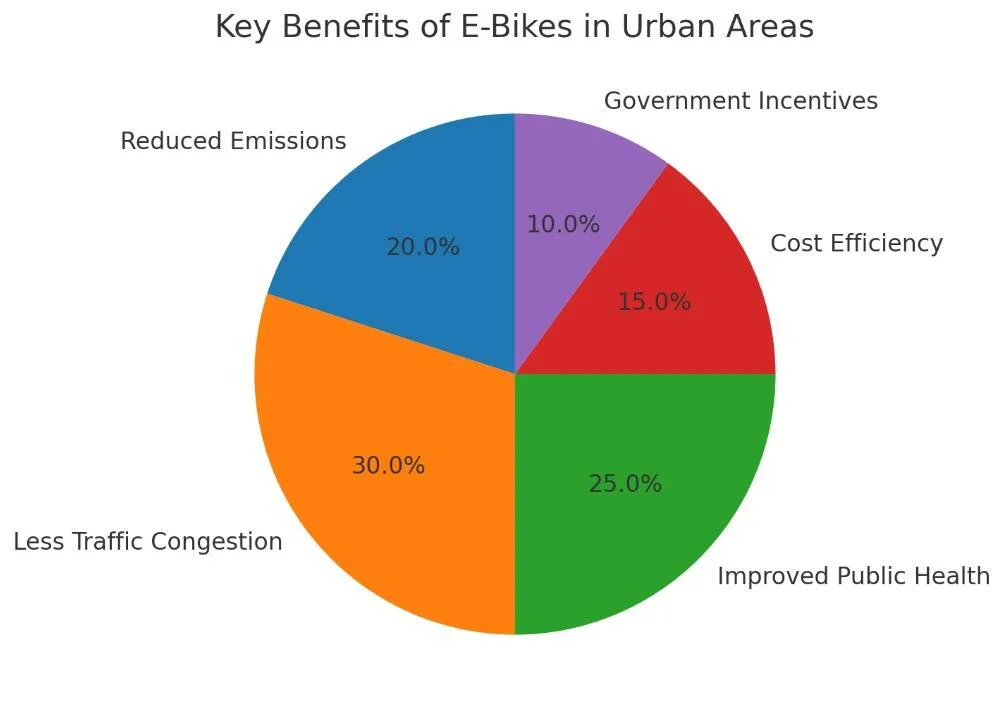
- Reduced Emissions: Transportation is one of the largest contributors to carbon emissions globally. E-bikes provide a zero-emission alternative, especially for short to mid-distance commutes that are typically done by cars or motorcycles.
- Alleviating Congestion: Urban areas are facing increasing traffic congestion, leading to longer commute times and inefficiency. E-bikes take up far less space on the road and can easily navigate through congested areas, reducing overall traffic load.
- Improving Public Health: By encouraging more people to cycle rather than drive, cities can improve air quality. Additionally, the health benefits of cycling, even with pedal assistance, contribute to overall well-being.
- Cost Efficiency: E-bikes offer a cheaper alternative to car ownership, particularly when factoring in fuel, maintenance, parking, and insurance costs. As fuel prices rise and urban living costs increase, e-bikes are becoming a practical and attractive choice.
- Government Incentives and Policies: Many cities and governments are recognizing the potential of e-bikes to reshape transportation, offering subsidies and building better cycling infrastructure. These incentives encourage adoption and further support the shift towards micromobility solutions.
- Last-Mile Solutions: E-bikes are increasingly being used for delivery services and last-mile transportation in urban areas. This helps businesses reduce delivery times while being more environmentally friendly.
As the world shifts towards more sustainable and efficient transportation solutions, e-bikes stand out as a practical, scalable, and environmentally beneficial option. This is a topic that resonates strongly with urban planners, policymakers, and consumers looking for greener alternatives.