Introduction: A law that sounds safe, but isn’t
Australia caps e-bike motor assistance at 25 km/h. In NSW, for example, the assistance must cut out once you hit 25 km/h. Transport for New South Wales+1
Queensland states the same principle: assistance must stop after 25 km/h. Queensland Government+1
On paper, that sounds responsible.
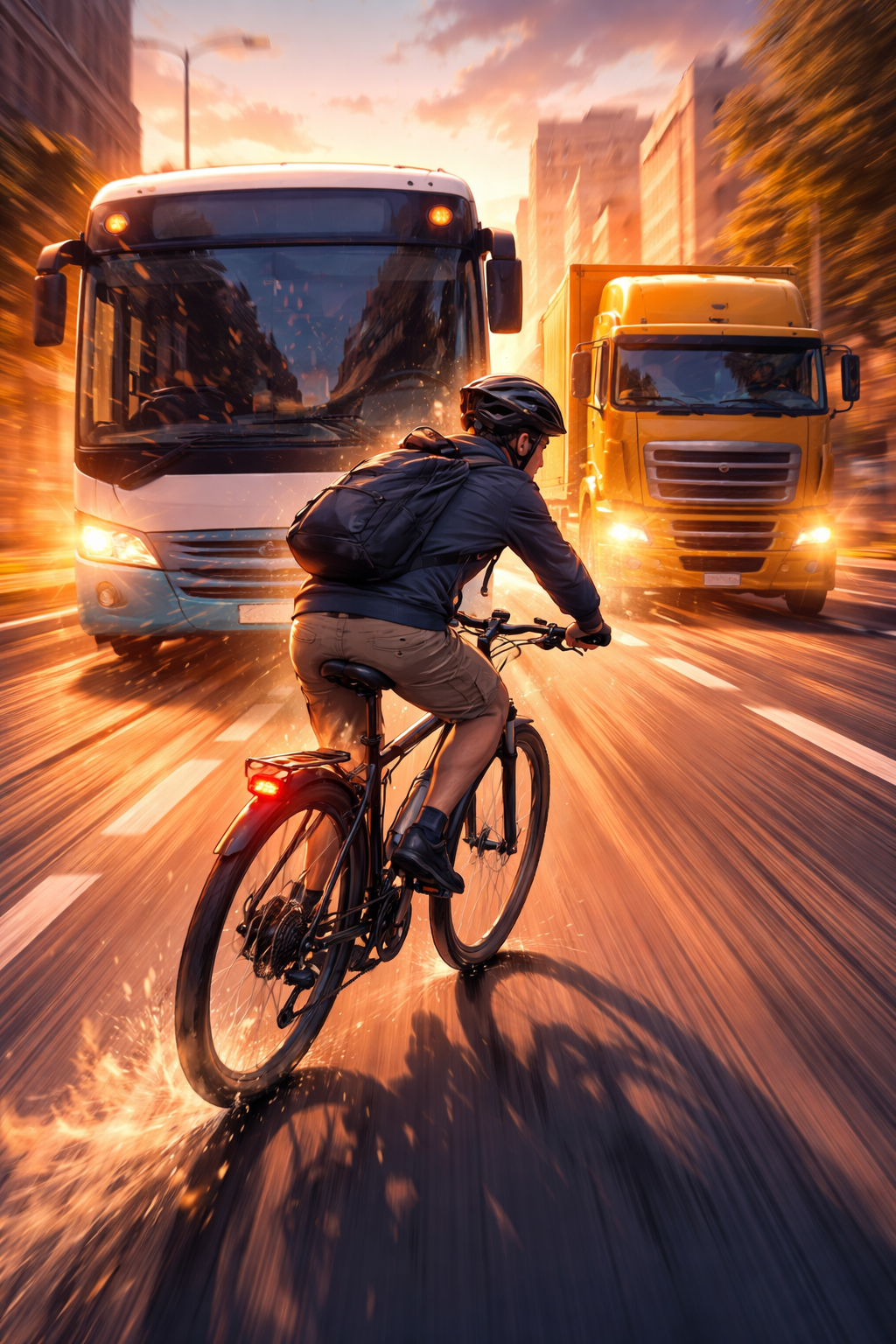
In real traffic, it can create a dangerous mismatch: you’re forced to ride slower than the flow, in the same lane, beside vehicles that weigh thousands of kilos and can accelerate instantly.
This post is based on real-world riding and workshop experience — and a simple point:
Safety isn’t just about limiting speed. It’s about matching the environment you’re riding in.
Why 25 km/h isn’t fast enough in real traffic
1) It doesn’t keep up with the roads we actually ride on
Most urban roads are 50–60 km/h. Even when cars are “doing the limit,” they’re still moving far faster than a 25 km/h assisted rider.
That forces riders into situations like:
-
being repeatedly overtaken at close distance
-
getting squeezed at pinch points
-
being “punished” for taking the lane when the shoulder disappears
-
becoming a moving obstacle when traffic is flowing
The problem isn’t e-bikes. It’s the speed differential.
2) A normal bicycle can exceed 25 km/h easily
Plenty of fit riders sit above 25 km/h on a standard bicycle — especially on flats, downhills, or with a tailwind.
So what exactly is being “prevented” here?
The law isn’t limiting bicycles. It’s limiting motor assistance — which matters most for:
-
older riders
-
heavier riders
-
people carrying cargo/kids
-
riders commuting in work clothes
-
riders dealing with hills, injuries, or joint pain
In other words: the people who benefit most from safer, steadier speed.
3) Big, heavy vehicles face fewer “safety caps”
A two-ton vehicle can legally travel at freeway speeds, and many vehicles are physically capable of far beyond that. Yet we don’t treat them as inherently unsafe just because they can.
We rely on:
-
licensing
-
training
-
enforcement
-
road design
-
vehicle standards
For e-bikes, we do the opposite:
-
we cap the assist speed low,
-
then pretend that equals safety.
But real safety is about systems, not a single number.
The result: riders get pushed into risk
When the assist cuts out at 25 km/h, riders often face a choice:
-
sit below traffic speed and get overtaken constantly, or
-
pedal hard to keep up (which many people can’t sustainably do), or
-
avoid main roads entirely (not always possible), or
-
ride in ways that are less predictable (weaving, jumping between shoulder and lane)
That’s not “safer.” That’s stressful, inconsistent, and more likely to produce mistakes.
A practical fix: Two Light E-Bike Categories (L1 and L2)
Below is a proposal built from real-life use cases. It aims to match rules to risk, instead of using one blunt cap for everything.
L1 (Light 1): Everyday commuter & utility e-bike
Purpose: commuting, errands, hills, cargo runs at sensible speeds with traffic awareness.
-
Power: 500W continuous, 1000W peak
-
Legal assisted speed: 32 km/h
-
Dashboard capability: up to 40 km/h (policy concept: capability exists, but compliance is enforced by setting/locking to legal limits for public roads)
-
Rider requirements:
-
Must carry ID at all times
-
1-day cycling safety course (think “white card” style: rules, lane positioning, braking, hazard awareness)
-
-
Registration / plate: not required
-
Where it can ride: bike lanes + shared paths allowed
-
Max vehicle weight: 40 kg
Why this works:
32 km/h is still modest, but it reduces the speed gap and makes riders less of a rolling obstacle in mixed traffic while staying in a bicycle-like risk profile.
L2 (Light 2): Higher-speed e-bike for roads only
Purpose: riders who need road-speed capability for longer commutes and car-speed corridors.
-
Power: 1000W continuous, 2000W peak
-
Legal speed: 60 km/h
-
Dashboard capability: up to 70 km/h (same policy concept: capability is not the same as legal operation)
-
Rider requirements:
-
Special licence via 1-day course
-
-
Registration: rego required
-
Where it can ride:
-
No shared paths
-
No bike lanes
-
Road use only
-
-
Max vehicle weight: 60 kg
Why this works:
If an e-bike is going to sit near traffic speed, it should be treated differently:
-
training + licensing
-
road-only rules
-
clear enforcement boundaries
That’s not anti-e-bike — it’s pro-clarity and pro-safety.
What this approach fixes (immediately)
-
Reduces unsafe speed differentials
-
Protects shared paths from high-speed vehicles
-
Creates a clear step-up pathway (L1 → L2) instead of pushing people into illegal mods
-
Encourages training (which is where real safety is built)
Important note on compliance (and why it matters)
Some states are actively tightening definitions and enforcement. NSW, for example, has indicated plans to reduce power limits for road-legal e-bikes. NSW Government
So if Australia wants fewer illegal high-power bikes on the road, the solution isn’t just crackdowns.
It’s creating realistic categories that match reality — and giving riders a legal path that doesn’t force them into unsafe situations.
Call to action
If you’ve ever felt the stress of being stuck at 25 km/h with cars flying past you, speak up.
-
Share this post
-
Talk to your local MP/state representative
-
Push for a two-tier model (L1 / L2) that matches risk to rules
Because the goal isn’t “faster bikes.”
The goal is safer roads, clearer categories, and laws that reflect real-world traffic.