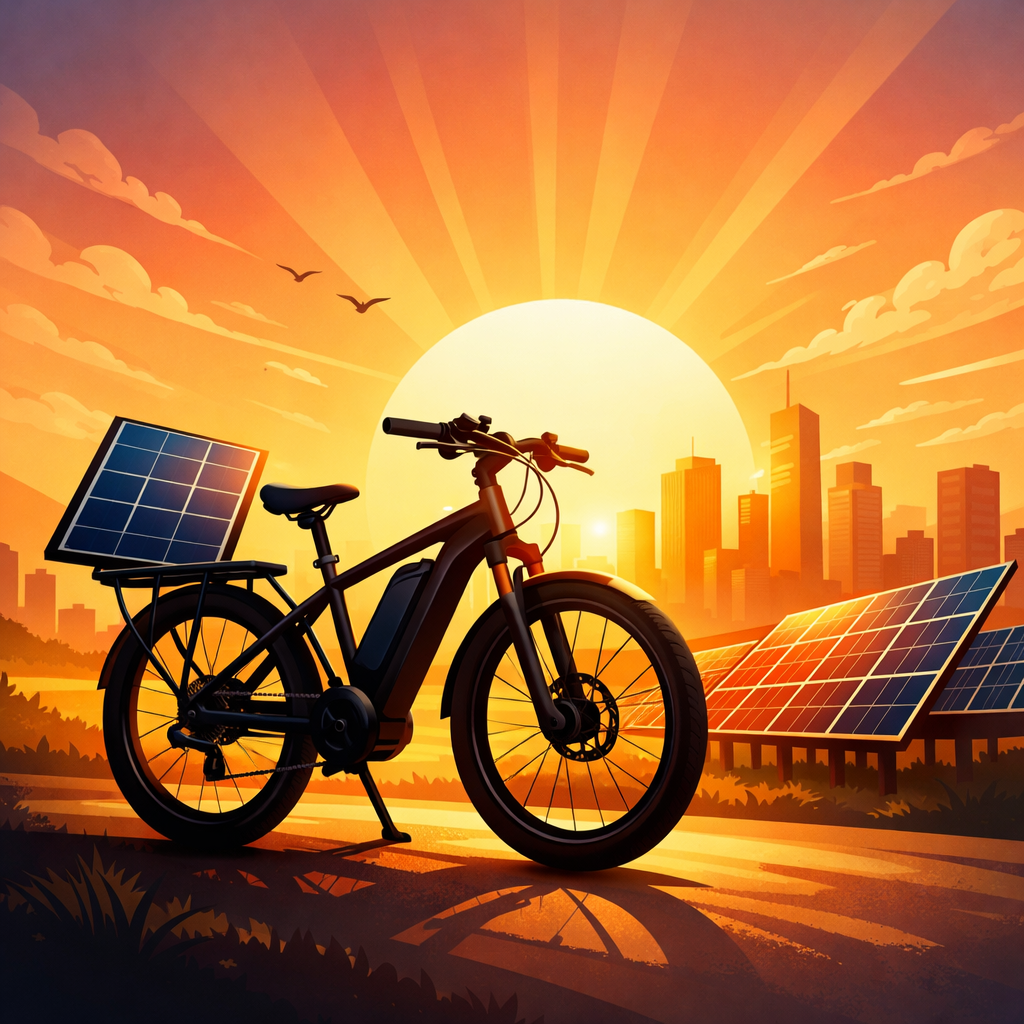
Image: A minimalist illustration of an electric bicycle with a built‑in solar panel under a sunrise city skyline, symbolising sustainability and freedom.
A Personal Introduction
Hi, I’m Mr. Rodrigues, a mechanical engineer who has spent the better part of a decade designing and testing electric bicycles. Long before they became fashionable, I saw the promise of these machines—not just as fun gadgets but as tools for resilience and independence. This article is especially for readers aged 35–64 who remember when household budgets were tighter and cars were simpler. It’s about ensuring we’re not caught off guard when the next crisis comes.
The Hidden Risk: Australia’s Fuel Vulnerability
Australia’s transportation system runs almost entirely on imported petroleum. New government data shows the country has 28 days of petrol, 24 days of diesel and just 20 days of jet fuel on handprocurementandsupply.com. That’s less than a month’s buffer. If a global conflict, severe price spike or shipping disruption cuts our supply, trucks and trains would stop moving goods, and supermarket shelves would emptyprocurementandsupply.com. Experts note that supermarkets typically hold only 10 days of dry food and hospitals have three days of medicinesprocurementandsupply.com.
The COVID‑19 pandemic gave us a preview of what supply shocks look like. People fighting over toilet paper was a minor problem; shortages in food or fuel would be far worse. The stark reality is that our national fuel security isn’t robust, and successive governments have allowed reserves to remain far below international benchmarksprocurementandsupply.com.
Why E‑Bikes Are the Most Efficient Vehicles
Electric bikes are not merely trendy toys; they’re the most energy‑efficient vehicles on the road today. Academic research shows that most e‑bikes consume less than 2 kWh per 100 km—about one‑tenth the energy of a small electric carmdpi.com. This efficiency translates directly into lower emissions: studies find that riding an e‑bike produces roughly forty times less CO₂ than driving a conventional vehicle the same distancemdpi.com. Because their batteries are small, e‑bikes can also be charged with renewable sources. A recent review of solar‑powered e‑bike projects notes that bikes equipped with integrated photovoltaic cells or charged from solar‑powered stations can top up their batteries during rides or while parkedmdpi.com. In other words, a modest rooftop solar panel or neighbourhood micro‑grid could keep your e‑bike rolling even if the power grid or fuel supply falters.
Another advantage is scale. There are more than 280 million e‑bikes, mopeds and scooters worldwide, and their adoption has already cut oil demand by about one million barrels per day—a reduction four times greater than what electric cars have achievedcarscoops.com. Researchers estimate that if 11 % of vehicle trips were made by e‑bike, transport‑related emissions would fall by around 7 %carscoops.com. With 60 % of car trips in the U.S. being less than 10 kmcarscoops.com—and a similar pattern in Australia—most everyday errands are perfectly suited to e‑bikes.
Benefits for People Aged 35–64
E‑bikes aren’t just efficient; they’re accessible. Modern pedal‑assist systems offer low‑impact cardiovascular exercise that strengthens the heart, improves circulation and supports mobility while reducing strain on jointsevelo.com. Riders control the level of assistance, getting a workout when they want and extra help on hills or longer trips. That’s invaluable for people in their 40s, 50s and 60s who want to stay active without risking injury.
E‑bikes also enhance independence. Step‑through frames and upright riding positions make it easier to get on and offevelo.com, and integrated lights, hydraulic brakes and wide tyres provide stability and confidenceevelo.com. For short trips—grocery runs, visits to family, doctor’s appointments—an e‑bike can often replace a car. In cities, using an e‑bike instead of driving reduces traffic congestion and frees you from the stress of parking.
Outdated Laws Are Holding Us Back
Despite these advantages, Australian regulations treat e‑bikes more harshly than cars. An electric bicycle’s motor assistance must cut out at 25 km/htruenorthbikes.com; in most states the motor is limited to 250 Wtruenorthbikes.com. Yet drivers with standard licences can operate multi‑ton vehicles capable of exceeding 200 km/h on public roads. This speed mismatch forces law‑abiding e‑bike riders to mix with traffic moving at 50–60 km/h, creating unnecessary hazards. Regulations are largely borrowed from European standards and don’t reflect Australia’s longer distances, sparse public transport and warmer climate.
What Australia Needs
A sensible e‑bike policy should reflect reality, not outdated fears. Practical reforms could include:
-
Raised assist speed limits—allow e‑bikes to assist up to 40 km/h on roads where motor traffic typically moves at 60 km/h. This keeps bikes from becoming a rolling roadblock while still maintaining safety.
-
Distinct categories for cargo bikes, commuter pedelecs and utility bikes, with appropriate power and speed allowances.
-
Support for solar charging and micro‑grids, enabling communities to remain mobile even during power outages.
-
Integration with road‑safety infrastructure, such as protected lanes and clear signage.
Implementing these measures would encourage more Australians to choose low‑cost, high‑efficiency transport and strengthen the country’s resilience against supply shocks.
Why It Matters to You
Many of us grew up in an era when countries built things to last and planned for the long term. Those instincts serve us well today. Rising fuel prices and supply uncertainties mean that cheap mobility and energy independence are no longer luxuries; they’re necessities. Investing in an e‑bike is one of the most practical steps you can take:
-
It shields your household from fuel price shocks.
-
It provides daily exercise without undue strain.
-
It reduces your carbon footprint and supports cleaner air.
-
It gives you a backup mode of transport if petrol supplies are disrupted or the power goes out.
Take Action
If this vision resonates with you, here’s how to help:
-
Try an e‑bike—test ride one at a local shop or rent one for a day. Experience the freedom firsthand.
-
Share this article with friends and family, especially those who haven’t considered e‑bikes.
-
Contact your state and federal representatives and ask for updated e‑bike legislation that reflects modern realities.
-
Support community initiatives that build bike lanes, solar micro‑grids and local charging stations.
E‑bikes are not a futuristic fantasy; they’re a tool we have right now to keep our communities moving when things get tough. Investing in them today will pay dividends in freedom, health and security tomorrow.
References
-
Australia’s fuel reserves—Data showing Australia holds 28 days of petrol, 24 days of diesel and 20 days of jet fuel; supply disruptions would empty supermarket shelves and strain hospital pharmaciesprocurementandsupply.com.
-
Low food and medicine buffers—Supermarkets carry roughly 10 days of dry food, seven days of frozen goods and hospitals have about three days of medicinesprocurementandsupply.com.
-
E‑bike efficiency—Most e‑bikes consume less than 2 kWh/100 km, about one‑tenth the energy of a small electric carmdpi.com and produce forty times less CO₂ than conventional vehiclesmdpi.com.
-
Solar‑powered e‑bikes—Solar e‑bikes with integrated photovoltaic cells and solar‑charged e‑bikes can recharge while parked or ridingmdpi.com.
-
Global impact of e‑bikes—Adoption of 280 million e‑bikes, mopeds and scooters has cut oil demand by ~1 million barrels per daycarscoops.com; if e‑bike trips reached 11 % of all journeys, transport emissions would drop about 7 %carscoops.com. In the U.S., 60 % of car trips are under 10 kmcarscoops.com.
-
Health benefits for older adults—E‑bikes provide low‑impact cardiovascular exercise, improving circulation and mobility without straining jointsevelo.com.
-
Australian e‑bike law—Motor assistance must taper off by 25 km/h and continuous power is capped at 250 W, limiting bikes to far slower speeds than nearby traffictruenorthbikes.com.