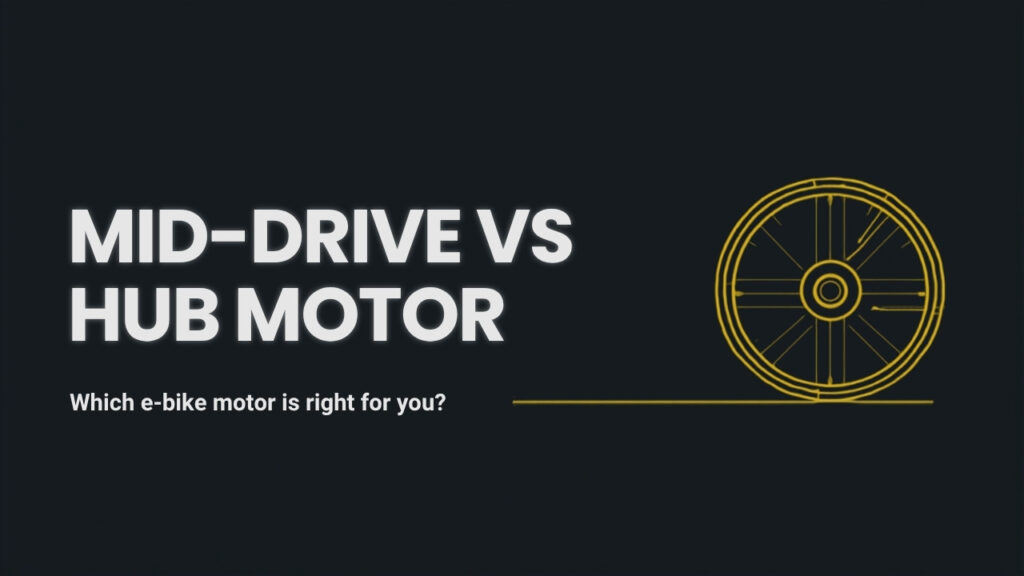
The core difference between a mid-drive vs hub motor is where the motor sits and how it delivers power. A hub motor is built into the centre of a wheel and drives that wheel directly, so its power is completely independent of your gears. A mid-drive motor sits at the bottom bracket (the cranks) and pushes its power through your bike’s chain and cassette, so it multiplies through the same gears your legs use. That single distinction explains almost everything that follows: mid-drives climb steep, technical terrain more efficiently by using low gears, while hub motors deliver smoother, uninterrupted, lower-maintenance power that’s ideal for everyday Sydney commuting. Neither is universally “better” — the right one depends on how and where you ride.
At Cyberbikes in Leichhardt we sell, service and rent both types, so we get asked this weekly. Here’s the honest, engineering-grounded answer — the same physics the hub-motor specialists at Grin Technologies (ebikes.ca) have documented for 15+ years — translated into what it actually means for your ride.
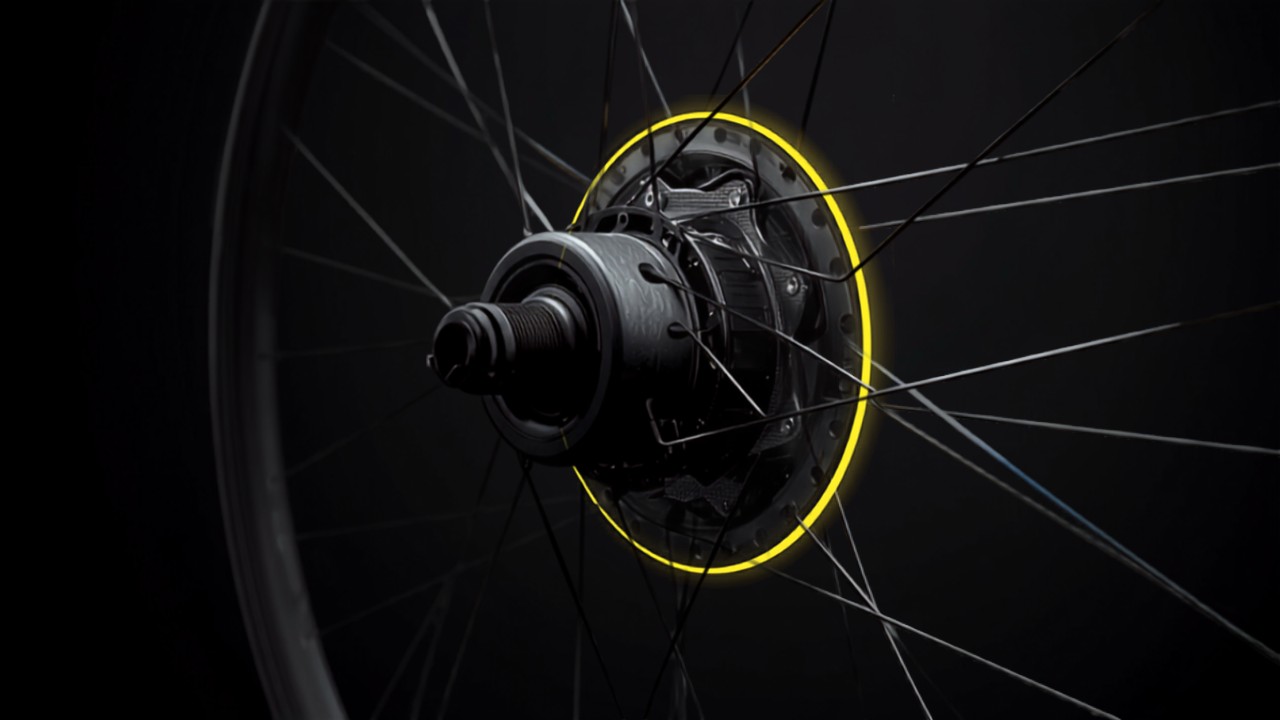
What’s the actual difference between a mid-drive and a hub motor?
How a hub motor works
A hub motor is a self-contained motor laced into a wheel — usually the rear on a bike like ours. There’s no external bracket, no extra chain: the wheel is the motor. Almost all are permanent-magnet brushless (BLDC) machines, and they come in two flavours. A direct-drive hub has no internal gears — the wheel spins at motor speed, around 200 rpm — which makes it simple, silent and able to do regenerative braking, but heavier and always mechanically engaged (so there’s a little drag when you’re not on the throttle). A geared hub adds a planetary gearset so a small, fast-spinning motor (often 3,000+ rpm) drives the slow wheel through a reduction. Geared hubs weigh roughly 50% less than an equivalent direct-drive and produce more torque, but they add a freewheel (no regen) and a bit of moving-part noise. Our own Centauro uses a rear hub motor precisely because it delivers power seamlessly without ever interrupting your pedalling.
How a mid-drive motor works
A mid-drive motor mounts at the bottom bracket and drives the front chainring, so its output runs through your bike’s chain, cassette and derailleur — the same drivetrain your legs power. The huge advantage: you can gear the motor down. Drop into an easy gear on a steep climb and the motor spins fast (where it’s efficient) while the wheel turns slowly with lots of torque. That’s why mid-drives shine on steep, high-resistance, low-speed terrain like mountain-bike trails. The trade-off is that everything the motor produces also loads your chain, so drivetrains wear faster, and on flat commutes you’re constantly shifting to keep the motor happy — backing off power for each gear change can feel taxing and cost you speed.
Mid-drive vs hub motor: the honest comparison
| Factor | Hub motor | Mid-drive motor |
|---|---|---|
| Power path | Drives the wheel directly, independent of gears | Drives the chainring, multiplied through your gears |
| Best at | Smooth, steady commuting & flat-to-rolling terrain | Steep, technical, low-speed climbing |
| Gear changes | Uninterrupted power through every shift | Must shift constantly; power dips between shifts |
| Drivetrain wear | Low — motor load bypasses the chain | Higher — all motor torque runs through the chain |
| Regen braking | Possible on direct-drive hubs | Not possible (freewheel drivetrain) |
| Maintenance | Fewer wear points; simple to live with | More moving parts and chain/cassette servicing |
| Weight balance | Weight at the wheel | Weight low and central |
If you want a deeper look at the two hub-motor sub-types, our guide to geared vs direct-drive hub motors and what the difference means for your ride breaks it down further.
The physics: watts, torque and why gearing matters
Every e-bike motor obeys the same simple rule: power (watts) = voltage × current (W = V × A). Torque, meanwhile, is set almost entirely by current — in a permanent-magnet motor, twice the current means roughly twice the torque. Speed is set by voltage: as the motor spins it generates a “back-EMF” voltage that rises with rpm and chokes off current until the motor settles at its running speed. That’s why you can’t get big torque and high speed for free — you pay for torque in amps, and amps get expensive because heating losses scale with the square of current (I²R). Push twice the current and you generate four times the heat in the copper windings.
This is exactly why the mid-drive vs hub motor debate comes down to gearing. A direct-drive hub spins its wheel at only ~200 rpm, so to make real torque it has to be physically large and draw serious current on a steep hill — where it also runs hottest and least efficiently. A mid-drive dodges that by letting you shift into a low gear: the motor stays in its happy zone (a permanent-magnet motor is most efficient at roughly 80% of its unloaded speed, around 80% efficiency), spinning fast while the wheel crawls uphill. The result in raw numbers: a good geared motor like the German Heinzmann can hit around 80 Nm of torque, versus roughly 35 Nm for a typical direct-drive hub — and a mid-drive in a low gear can multiply its torque even further. For an everyday rider that translates to one thing: on a brutal climb the geared or mid-drive option will feel stronger and stay cooler, while on a flat commute the difference all but disappears.
Want to see the trade-offs for your exact hill and weight? Grin’s free motor simulator lets you compare hub and mid-drive setups on the same grade — a great sanity check before you buy.
Which is better for Sydney riding and NSW law?
For most Sydney riders — commuting Parramatta Road, running errands around Leichhardt, the odd bike-path cruise — a hub motor wins on the things that matter day to day: uninterrupted power through every gear change in stop-and-go traffic, far less drivetrain wear, and simpler, cheaper maintenance. A mid-drive earns its keep if your riding is genuinely steep and technical — think long dirt climbs or heavy loaded touring on grades where you’re constantly shifting anyway.
Either way, the law is the same in New South Wales: a legal pedal-assist e-bike (a “pedalec”) is limited to 250W of continuous rated power with assistance cutting out at 25 km/h, or 200W for a power-assisted throttle bike. The motor location doesn’t change your legal status — a 250W hub and a 250W mid-drive are treated identically. What changes is the ride feel. Our Cyberbikes Centauro pairs a compliant 250W rear hub motor with a 48V 25Ah (1,200Wh) UL 2271-certified Samsung battery and an ISO 4210-compliant 6061 aluminium frame — a full-suspension, step-through build tuned for exactly the kind of smooth, low-maintenance commuting most Sydneysiders actually do, with a 150 kg rider-and-cargo capacity for the shopping run.
Not sure 250W is enough to haul you up a Sydney hill? We answer that directly in our breakdown of whether a 250W e-bike motor is actually powerful enough.
See it in action
Whichever motor you run, torque matters when you’re bolting it to a bike — here’s a quick Cyberbikes tip on getting motor mounting torque right:
Frequently Asked Questions
Is a mid-drive or hub motor better for commuting?
For everyday commuting, a hub motor is usually the better choice. It delivers power without interrupting your gear changes in stop-and-go traffic, puts almost no extra load on your chain and cassette, and needs less maintenance. Mid-drives are better suited to steep, technical, low-speed climbing where you’re shifting constantly anyway.
Do mid-drive motors wear out chains faster?
Yes. Because a mid-drive sends all of its power through the bike’s chain, cassette and derailleur, those components wear faster than on a hub-motor bike, where the motor drives the wheel directly and bypasses the drivetrain entirely. Expect more frequent chain and cassette replacement on a mid-drive.
Does the motor type affect NSW e-bike law?
No. In New South Wales the legal limits are 250W continuous rated power with assistance cutting out at 25 km/h for a pedal-assist e-bike (or 200W for a power-assisted throttle bike), regardless of whether the motor is a hub or mid-drive. Motor location does not change your bike’s legal classification.
Come try both at Cyberbikes Leichhardt
The best way to settle the mid-drive vs hub motor question is to feel the difference yourself. Come in for a test ride at Cyberbikes, 281 Parramatta Road, Leichhardt, or browse the hub-driven Cyberbikes Centauro online. Ask us about rent-to-own plans from $99.99/week, or call 0491 794 668 — we’re open Tuesday to Saturday.
#Cyberbikes #ebikeSydney #electricbikeLeichhardt #middrive #hubmotor #CentauroEbike #ebikeCommuting #Sydney