Electric Bike Laws in Australia 2026 — What Riders Need to Know
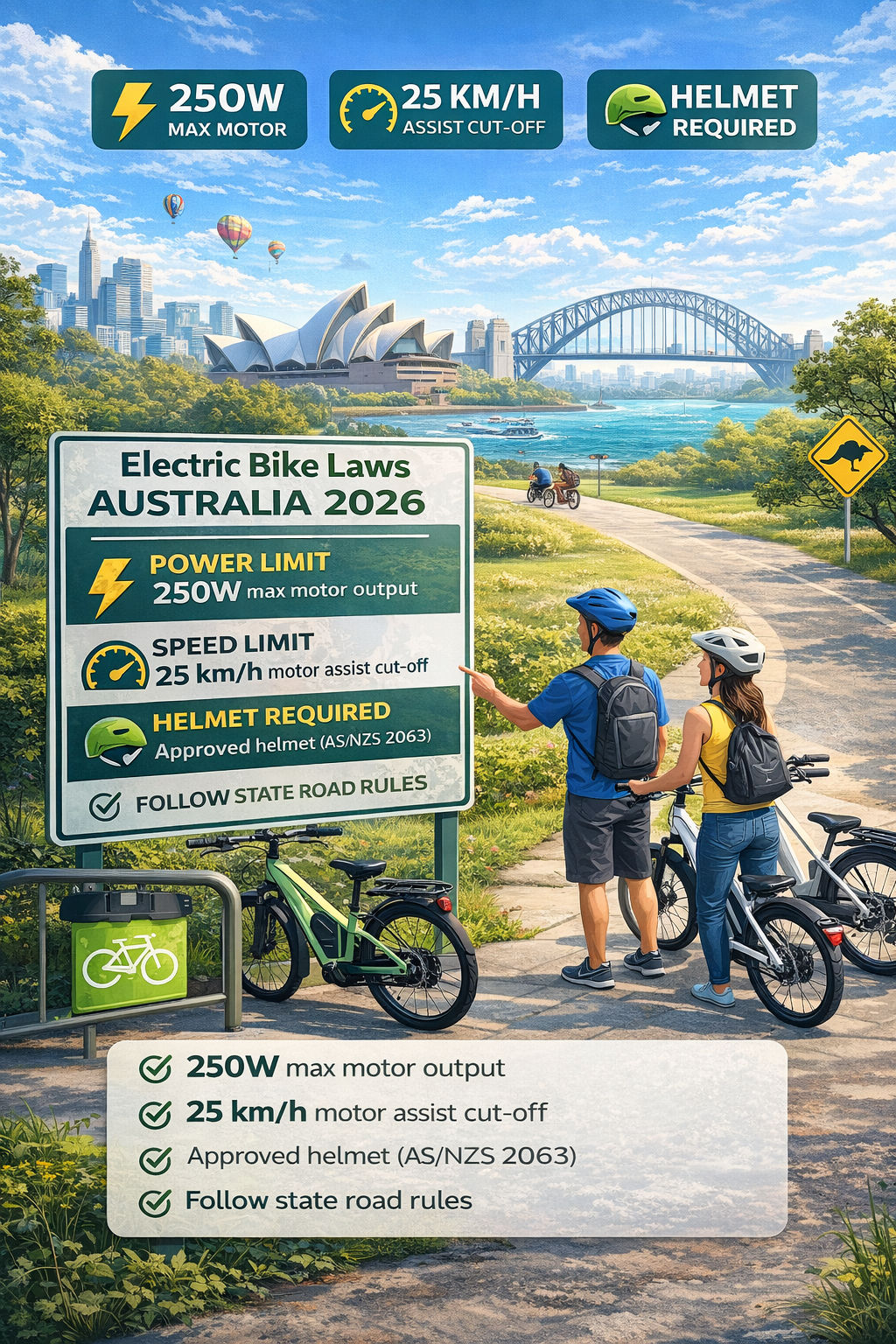
Thinking about getting an electric bike in Australia? You are not alone. E-bikes are growing quickly across the country because they make commuting easier, help more people ride longer distances, and offer a practical low-emission alternative for everyday transport.
Before you buy or ride one, it is worth understanding the rules. The short version is simple: legal e-bikes in Australia must stay within specific power and speed limits, and the road rules that apply to you can also vary depending on the state or territory where you ride.
Power Limits: 250W and 200W
In Australia, the two most important legal frameworks to understand are these:
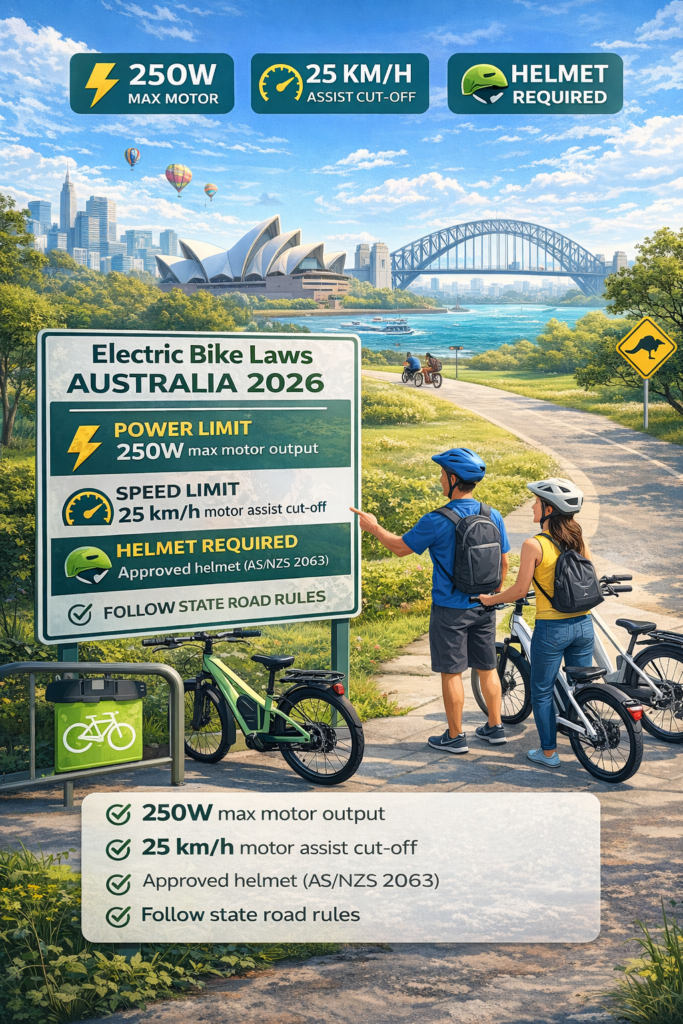
Pedal-assist e-bikes built around the 250W / 25 km/h standard
These are the e-bikes most riders think of today. They are pedal-assist bikes where the electric motor helps you while you are pedalling, and the assistance cuts out at 25 km/h.
Power-assisted cycles up to 200W
Australia also still has a 200W power-assisted cycle pathway in some legal and regulatory contexts. That is why you may still see 200W mentioned in official guidance and older legal summaries.
The important point is this: not every electric bike sold online is automatically legal for Australian road use. Power, cut-off speed, and how the bike delivers assistance all matter.
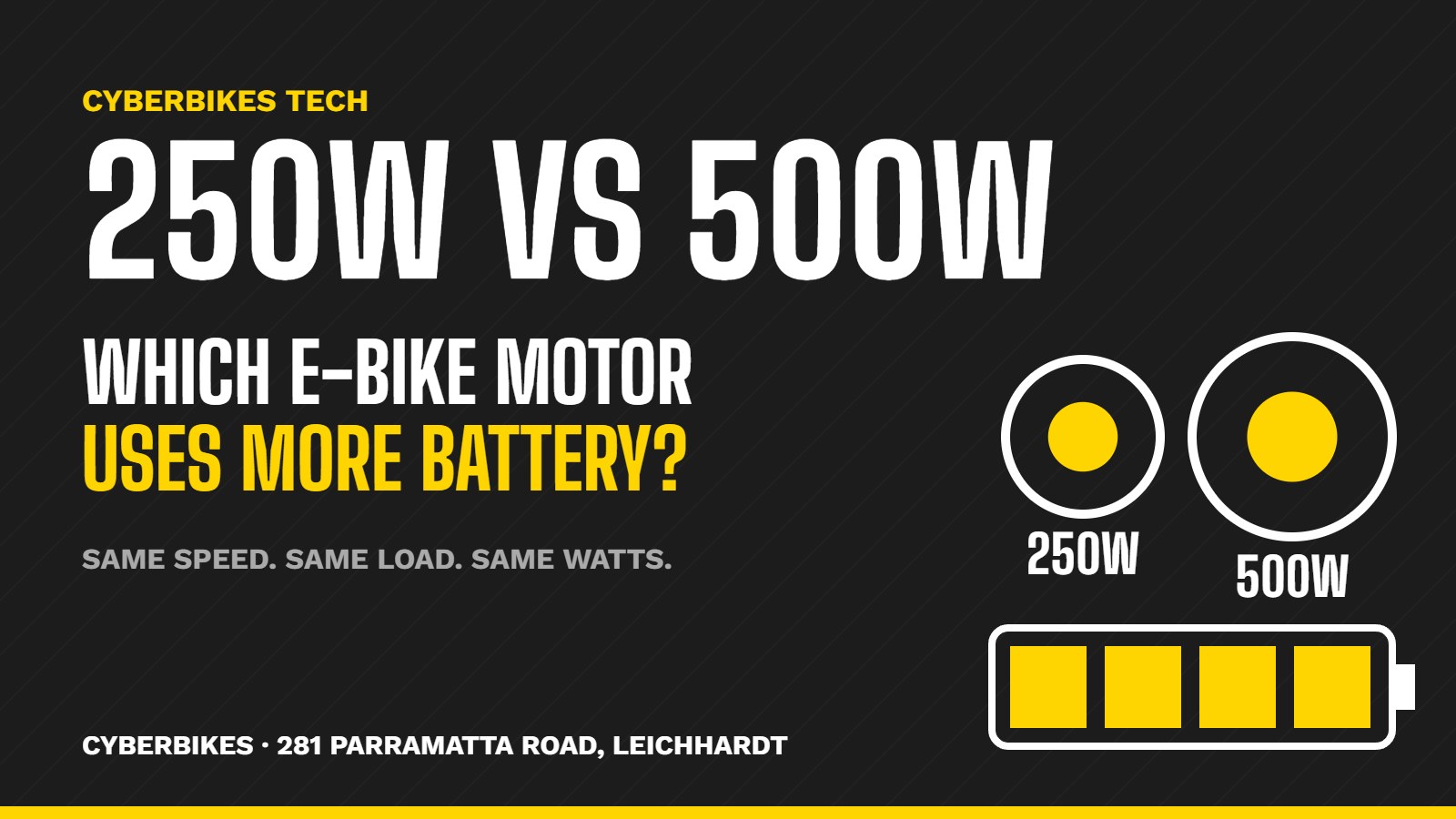
What About 500W?
This is where many riders get confused.
When a seller talks about 500W peak power, they may be referring to a short burst of output under load, such as during acceleration or climbing. The legal question is generally about the bike’s rated continuous output and whether it fits the legal bicycle category where it will be used.
That is why a bike marketed with higher “peak” numbers is not automatically illegal — but it still must be configured within the legal requirements for the category it is being sold and ridden under.
Speed Limit: 25 km/h Motor Cut-Off
For road-legal pedal-assist e-bikes built around the common 250W standard, the motor must stop assisting at 25 km/h.
That does not mean you are forbidden from travelling faster than 25 km/h. It means the motor must stop helping you once you reach that point. If you pedal harder or coast downhill and go faster under your own effort, that is different from the motor continuing to push you.
If an e-bike has been modified so the motor keeps assisting above the legal cut-off, it may no longer be treated as a legal bicycle. That can create problems with road legality, insurance, and enforcement.
Where Can You Ride?
This is where riders need to be careful, because the answer is not identical in every state or territory.
As a general rule, legal e-bikes usually follow the same road rules as regular bicycles. That means they can usually be ridden where bicycles are allowed, but the details around footpaths, shared paths, local signage, and some public land rules can vary.
A safer way to think about it is:
- Roads: usually the same rules as bicycles
- Bike paths and shared paths: often allowed, unless signage says otherwise
- Footpaths: depends on state and local rules
- National parks and trails: depends on the authority managing that land
Before riding in a new area, check the current rules from your state road authority or the local land manager.
Helmet Rules
Yes, you need to wear an approved bicycle helmet.
Helmet rules apply to e-bike riders just as they do to bicycle riders. The safest wording for a public guide is to say that riders must wear an approved helmet that complies with the relevant Australian requirements in their jurisdiction.
Do You Need a Licence or Registration?
For a legal e-bike that fits the bicycle category, the answer is usually no.
You generally do not need a driver licence, registration, or compulsory third-party insurance to ride a legal e-bike that complies with the rules applying in your state or territory.
If the bike falls outside the legal bicycle definitions, however, it may be treated as a motor vehicle instead. That can change everything.
How Centauro Is Configured for Australian Road-Use Requirements
The Centauro is configured around the key road-use requirements riders care about most:
- 250W continuous rated motor output
- 25 km/h assist cut-off
- Pedal-assist operation
- A practical commuter and cargo-focused design for everyday riding
That makes it a much simpler choice for riders who want a bike designed around legal road-use expectations rather than grey-area modifications or off-road-only setups.
That said, riders should still check the current rules that apply in the state or territory where they plan to ride.
The Bottom Line
If you want an e-bike that is straightforward to ride legally in Australia, keep these points in mind:
- Stay within the legal power category for the bike you are buying
- Make sure motor assistance cuts out at 25 km/h if it is a road-legal pedal-assist model
- Wear an approved helmet
- Follow the bicycle rules that apply in your state or territory
- Check local rules for footpaths, shared paths, parks, and trails
The safest buying decision is usually the simplest one: choose a bike designed around Australian road-use requirements from the start, rather than trying to work backwards from a high-powered imported model.
Note: This article is a general guide only and is not legal advice. Rules can change, and state or territory requirements may differ. Always check the latest official guidance in the place where you ride.