Mid-drive vs hub motor comes down to one thing: where the motor sits and how it uses gears. A hub motor is built into the wheel and spins at wheel speed; a mid-drive sits at the pedals and pushes its power through the bike’s chain and gears. That single difference decides how each one climbs hills, how much it weighs, how much maintenance it needs, and how it feels to ride around Sydney. Both are the same kind of motor underneath — the physics is what separates them.
Mid-drive vs hub motor: the short answer
Nearly every e-bike motor is a permanent-magnet brushless DC machine. What changes is the drive location. A hub motor lives inside the front or rear wheel and turns the wheel directly. A mid-drive sits at the bottom bracket (the cranks) and drives the chain, so it shares the bike’s cassette and gears with your legs. Because a mid-drive borrows the bike’s gearing, it can keep spinning fast — where it is efficient — even when you crawl up a steep hill. A hub motor is stuck turning at wheel speed, which is roughly 200 rpm on a moving bike, so on a steep climb it slows down and works harder. That’s the heart of the comparison, and the rest of this guide unpacks what it means for you.
How a hub motor actually works
Grin Technologies, whose hub-motor engineering guide is one of the most trusted references in the industry, splits hub motors into two families: direct-drive and geared.
A direct-drive hub is about as simple as machinery gets — the wheel is the motor. There are no internal gears and no moving parts other than the wheel itself. The trade-off is size: because the wheel only turns at around 200 rpm, and a motor’s power density rises with the speed between its magnets and windings, a direct-drive hub has to be big and heavy to make useful torque. It’s also always mechanically engaged. That’s good — it makes regenerative braking possible — but bad, because you’re always dragging the motor even when coasting.
A geared hub puts a small planetary gearset inside the hub to step a fast, efficient motor (often spinning over 3,000 rpm) down to wheel speed. These weigh roughly 50% less than a direct-drive of the same power and often make more torque — Grin notes a quality geared hub can produce up to 80 Nm versus about 35 Nm for a typical direct-drive. A one-way freewheel means almost no drag when you’re not on the throttle, but it also rules out regen, and the gears make a little audible noise. For everyday city riding, a geared rear hub is the sweet spot: light, quiet, efficient and low-maintenance.
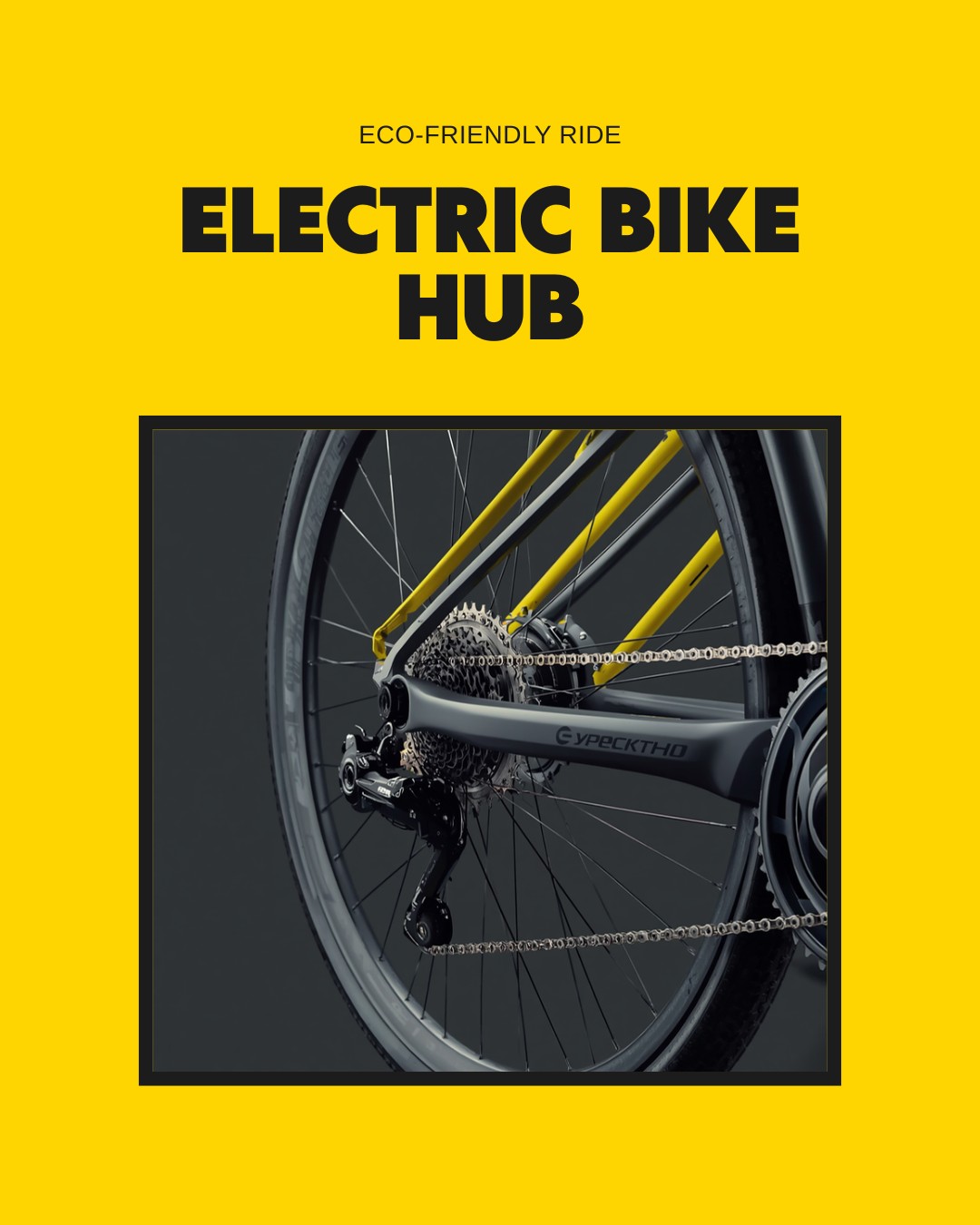
How a mid-drive works — and why it climbs so well
A mid-drive motor sits centrally at the cranks and feeds its power into the same chain your legs drive. That means it passes through the bike’s gears. Drop to a low gear on a steep hill and the gearing multiplies the motor’s torque at the wheel while letting the motor itself keep spinning quickly in its efficient zone. A hub motor can’t do that — it’s locked to wheel speed.
Why does staying at high rpm matter so much? It comes down to heat. As Grin explains in its breakdown of motor power ratings, it is torque, not power, that overheats a motor. Torque is made by current flowing through the copper windings, and heat rises with the square of that current — the I²R relationship. Double the current to double the torque and you generate four times the heat. On a steep climb a hub motor slows down, so to keep pushing it has to pour in high current at low rpm, and it heats up fast. A mid-drive shifts to a low gear, keeps its rpm (and efficiency) high, and makes the same wheel torque with far less current and far less heat. That’s why mid-drives are the default on serious mountain and heavy-cargo bikes.
Mid-drive vs hub motor: side-by-side
| Feature | Geared hub motor | Direct-drive hub | Mid-drive |
|---|---|---|---|
| Where it sits | In the wheel | In the wheel | At the cranks |
| Uses the bike’s gears | No | No | Yes |
| Steep-hill climbing | Good | Fair (can overheat) | Excellent |
| Weight | Light | Heavy | Central, low |
| Drivetrain wear | Low | Low | Higher |
| Regen braking | No | Yes | No |
| Noise | Slight whir | Silent | Slight whir |
| Maintenance | Low | Low | Higher |
| Best for | City commuting | Flat, high-speed, regen | Steep hills, heavy cargo |
Watch: buy the engineering, not the looks
Before you get pulled in by a spec sheet, it’s worth understanding what actually makes an e-bike good. Our own explainer on why the engineering matters more than the styling:
What “250W” really tells you (less than you think)
Riders often shop by the wattage number, but Grin makes a compelling case that a motor’s watt rating is close to meaningless on its own. The exact same motor gets sold as 250W, 500W or 1000W by different vendors — all defensible, because a motor doesn’t produce a fixed power when you switch it on. Its real output depends on how hard it’s loaded and how much current the controller allows. A watt is a watt no matter where it comes from: 600 watts pushing you up a hill feels identical whether it’s from a geared hub, a direct-drive or a mid-drive. What actually limits a motor is how much torque it can make before heat builds up faster than it can shed it. So don’t fixate on the sticker — look at how the whole system (motor, controller, battery voltage and gearing) behaves at your real riding speeds.
In Australia this matters less than it does elsewhere, because NSW law caps pedal-assist e-bikes at 250W continuous and 25 km/h. At those legal speeds a well-chosen hub motor is already sitting comfortably in its efficient band, which is exactly why it’s the right tool for a compliant commuter bike.
Which motor is right for Sydney riding?
For most Sydney commuting — flat-to-rolling roads, bike paths, the odd bridge climb, plus shopping and cargo — a geared rear hub motor is the practical winner. It’s light, quiet, efficient, low-maintenance and doesn’t chew through your chain and cassette the way a torquey mid-drive can. It also keeps the motor independent of the drivetrain, so a slipped chain doesn’t leave you stranded.
That’s the exact reasoning behind our own bike. The 2026 Cyberbikes Centauro runs a 250W rear hub motor paired with a 48V 25Ah (1200Wh) Samsung battery, full suspension (100mm front, 120mm rear), and a frame-welded rear rack rated to 50kg, all for $3,999. It’s built to comply with UL 2849, UL 2271, ISO 4210 and EN 15194, and carries a combined rider-and-cargo load up to 150kg. For NSW commuting, that geared-hub setup hits the sweet spot of quiet reliability and low upkeep — no drivetrain-shredding torque spikes, no fuss. If your rides involve genuinely brutal off-road climbs with heavy loads, a mid-drive is worth the extra maintenance; for nearly everyone else in the city, the hub wins.
Want the deeper dive on the sensors and controllers that decide how smoothly any of these motors delivers its power? Read our companion guide on sensored vs sensorless e-bike motors.
Frequently Asked Questions
Is a mid-drive or hub motor better for steep hills?
A mid-drive is better for steep, sustained climbs because it drives through the bike’s gears. Dropping to a low gear multiplies torque at the wheel while keeping the motor spinning fast and efficient, which means less current and far less heat. A hub motor is fixed to wheel speed, so on a steep hill it slows down and draws high current, making it more prone to overheating. For flat-to-rolling city riding, a geared hub handles hills just fine.
Does the Cyberbikes Centauro use a hub or mid-drive motor?
The 2026 Cyberbikes Centauro uses a 250W rear hub motor, paired with a 48V 25Ah (1200Wh) Samsung battery. A geared rear hub is ideal for Sydney commuting: it’s light, quiet, low-maintenance, keeps the motor independent of the chain, and sits within NSW’s 250W and 25 km/h pedal-assist limits.
Do hub motors wear out faster than mid-drives?
Generally the opposite. A mid-drive pushes its torque through the chain and cassette, so those parts wear faster and need more frequent service. A hub motor drives the wheel directly and leaves your drivetrain alone, so it’s usually the lower-maintenance choice — one reason it suits everyday commuters.
Come see the difference for yourself
The best way to understand how a geared hub motor feels is to ride one. Come in for a test ride at Cyberbikes, 281 Parramatta Road, Leichhardt, browse the Centauro e-bike online, or ask us about rent-to-own plans from $99.99/week. Call 0491 794 668 or visit us Tuesday–Saturday.
#eBikeSydney #electricbikeLeichhardt #Cyberbikes #Centauro #hubmotor #middrive #ebiketech #rideelectric