The best ebike batteries are high-quality lithium-ion packs built with premium 18650 or 21700 cells from trusted makers such as Samsung, LG or Panasonic, matched to the range and power you actually need. For most riders that means a genuine 48V–52V pack with a solid battery management system (BMS) and recognised safety certification. There is no single “best” battery for everyone — the right choice depends on your riding style, range and budget, which we break down below.
 When choosing an electric bike (e-bike) battery, the “best” option isn’t one-size-fits-all. The right battery depends on your specific needs, riding style, and priorities. Whether you’re looking for speed, durability, or overall reliability, different battery types serve different purposes. In this post, we’ll explore the best options based on your goals and give insight into the key factors to consider when purchasing an e-bike battery.
1. The Best Battery for High Performance: Lithium Polymer (LiPo)
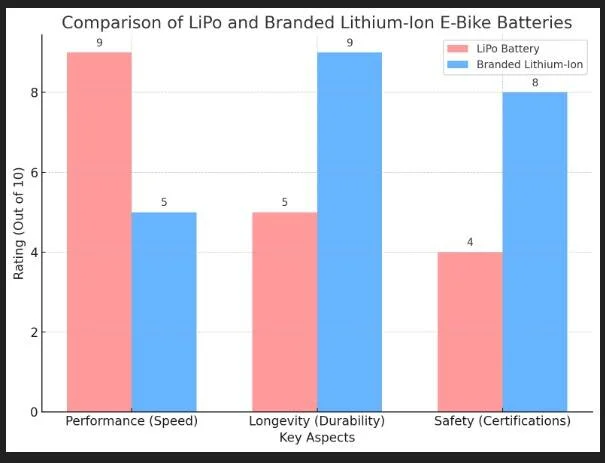
If your priority is speed and high performance—such as in racing or off-road activities—Lithium Polymer (LiPo) batteries are often a top choice. LiPo batteries have a high energy density, meaning they can pack a lot of power in a compact size. This results in higher speeds and quicker acceleration. However, they are often more delicate and require careful handling, as they can degrade faster if not maintained properly.
Key Benefits of LiPo Batteries:
When choosing an electric bike (e-bike) battery, the “best” option isn’t one-size-fits-all. The right battery depends on your specific needs, riding style, and priorities. Whether you’re looking for speed, durability, or overall reliability, different battery types serve different purposes. In this post, we’ll explore the best options based on your goals and give insight into the key factors to consider when purchasing an e-bike battery.
1. The Best Battery for High Performance: Lithium Polymer (LiPo)
If your priority is speed and high performance—such as in racing or off-road activities—Lithium Polymer (LiPo) batteries are often a top choice. LiPo batteries have a high energy density, meaning they can pack a lot of power in a compact size. This results in higher speeds and quicker acceleration. However, they are often more delicate and require careful handling, as they can degrade faster if not maintained properly.
Key Benefits of LiPo Batteries:
- High energy density: More power in a smaller, lighter package.
- Excellent for performance-focused riders: Ideal for those looking to push speed and power limits.
- Fast charging: They can often charge more quickly than other battery types.
- Shorter lifespan: LiPo batteries typically have a shorter life cycle than other types.
- More sensitive: They require precise care to avoid damage and maintain performance.
- Long lifespan: Expect reliable performance over thousands of charge cycles.
- Proven quality: Major brands source and test their cells thoroughly, reducing the risk of defects.
- Stable performance: These batteries maintain efficiency over time, making them ideal for daily commuting and long rides.
- Slightly heavier: Batteries with lower energy density may be bulkier compared to high-performance options like LiPo.
- Not as fast: While reliable, these batteries may not offer the same acceleration as high-performance alternatives.
- UN38.3 Certification: This is a global standard that ensures the battery is safe for transport. It confirms that the battery has been tested for factors like extreme temperature fluctuations, altitude simulation, and impact resistance.
- UL Certification: For e-bike batteries, UL 2271 and UL 2849 are key certifications to check.
- UL 2271 ensures that the battery pack meets rigorous safety standards specifically for light electric vehicles like e-bikes.
- UL 2849 covers the entire e-bike electrical system, including the battery, ensuring the system operates safely without causing electrical malfunctions or fires.
- ISO 9001: This certification ensures that the factory producing the batteries follows strict quality management processes. It’s a good indicator of consistent manufacturing practices and quality assurance.
- Performance-focused riders: Choose LiPo batteries if you want speed and high energy density, but be prepared for a shorter lifespan and the need for careful maintenance.
- Daily commuters or long-distance riders: Opt for branded lithium-ion cells from trusted manufacturers (e.g., Samsung, LG, Sony) if you prioritize longevity and stability. They may not be the fastest, but they are built to last and perform consistently over time.
- Safety-conscious buyers: Always check for UN38.3, UL 2271, UL 2849 certifications, and factories with ISO 9001 compliance to ensure you’re buying a battery that’s safe and reliable.
Frequently Asked Questions
What are the best ebike batteries?
The best ebike batteries are lithium-ion packs using premium 18650 or 21700 cells from established manufacturers such as Samsung, LG or Panasonic, paired with a quality battery management system. A genuine 48V–52V pack from a trusted brand gives most riders the best balance of range, lifespan and safety. Always confirm the cells are authentic and the battery carries recognised safety certification.
How long do the best ebike batteries last?
A good lithium-ion e-bike battery typically lasts 500–1,000 full charge cycles, or roughly three to five years of regular riding, before its capacity noticeably drops. Charging between 20% and 80%, avoiding extreme heat, and always using the correct charger will help you get the most life out of it.
Are integrated battery ebikes better than removable battery ebikes?
Integrated battery ebikes hide the pack inside the down tube, which shields the cells from rain, road grit and knocks, keeps the weight low and central, and gives a cleaner frame. A removable battery is more practical if you park outside and charge indoors, or want to carry a spare on longer rides. Many integrated packs can still be taken out for servicing, so check before you buy: a fully sealed pack means a workshop visit for any battery work.
What are the best bike batteries?
The best bike batteries are lithium-ion packs built from genuine 18650 or 21700 cells — Samsung, LG or Panasonic — with a proper battery management system and recognised safety certification. On an e-bike, a 48V–52V pack in that spec range gives the best mix of range, cycle life and safety, and it is what Cyberbikes fits to the Centauro. Cheap unbranded cells are where most range loss, swelling and charging faults come from, so the cell brand and the BMS matter far more than the sticker capacity.