One of the first questions we hear at Cyberbikes Leichhardt is: “So… how much are these things?” It’s a fair ask. E-bike prices in Australia span a wild range — from budget specials under $1,500 to high-end machines that rival a secondhand car. Here’s how to make sense of it all before you buy.
Short answer for anyone weighing up how much to spend on an electric bike in Australia in 2026: budget $2,000–$3,500 for a commuter you will actually keep, and treat anything under $1,500 as a risk rather than a bargain.
The Three Price Tiers
Under $1,500 — buyer beware. At this price point you’re getting basic components, limited warranty, and a battery that tends to degrade quickly. These aren’t necessarily terrible for occasional weekend rides, but they won’t survive daily commuting. If you’re buying new, we’d steer you away from this tier.
$1,500–$3,500 — the sweet spot. This is where quality-to-price starts making real sense. You’ll find bikes with reputable motors, decent 400–500Wh batteries, and proper warranty support. Most entry-level models at Cyberbikes sit comfortably here — capable enough for Sydney’s hills and long enough in range for most commutes.
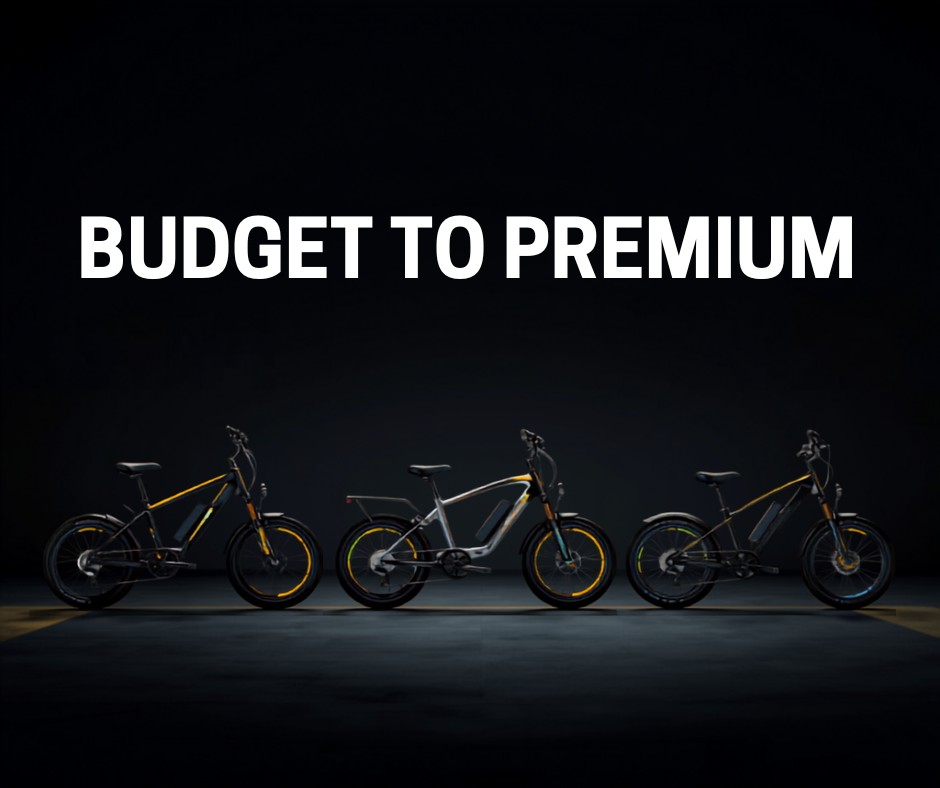
$3,500–$8,000+ — premium territory. At this level you get Bosch or Shimano STEPS motor systems, 600Wh+ batteries, hydraulic disc brakes, and bikes built to last a decade-plus with proper maintenance. Our Centauro e-bike lives here — a full-suspension, step-through powerhouse designed for riders who want the real deal. When you’re riding it every day on Parramatta Road, quality matters.
What Actually Drives the Price Up?
Three things separate a $1,800 e-bike from a $5,000 one:
The motor. Mid-drive motors from Bosch, Shimano, or Brose cost more to produce — but they’re more efficient, more responsive, and last significantly longer than cheap hub motors.
The battery. A quality 500Wh lithium-ion pack from a reputable cell manufacturer (LG, Samsung, Panasonic) adds real cost, but it’s what gives you reliable range and a lifespan that won’t disappoint after 18 months.
The components. Hydraulic disc brakes, quality shifters, solid frame construction — manufacturers cut corners somewhere on cheaper builds, and you’ll feel every one of those shortcuts when you’re riding daily in Sydney traffic.
The Centauro: Built for Riders 35 and Over
If you’re in your mid-30s, 40s or 50s and thinking seriously about getting back on a bike — or upgrading from a basic commuter — the Cyberbikes Centauro was built with you in mind. It’s a full-suspension, step-through e-bike with a 48V 25Ah Samsung battery, giving you serious range without the back strain. The step-through frame means no awkward dismounts in work clothes, and the full suspension handles Sydney’s patchy roads and kerbs without rattling your joints.
Riders in this age group consistently tell us the same thing: they wish they’d done it sooner. The Centauro gives you the confidence and comfort to actually use your e-bike every day — not just on weekends when you feel like it.
Don’t Forget the Running Costs (Or Lack Thereof)
The sticker price is only part of the story. E-bikes are extraordinarily cheap to run:
- Charging costs roughly 10–20 cents per full charge
- Annual servicing: around $100–$200 for a basic tune-up
- No registration, no petrol, no CTP insurance required in NSW
Compare that to the average Sydney car. Parking alone in the CBD or inner west often runs $300–$500 a month. Over two or three years, a quality e-bike from Cyberbikes pays for itself many times over — and you arrive feeling better than you would sitting in traffic on Parramatta Road.
What e-bikes actually cost at each price band
The three tiers above are the short version. Here is the longer answer, band by band, so you can see exactly what your money buys.
Under $1,500 — the budget zone
These bikes exist, mostly through online marketplaces and grey-market importers, and the risks are real: battery cells of unknown origin that may not meet the Australian safety standards mandatory since February 2025, motor specs that are frequently misrepresented, and no local warranty support. Some are also not road-legal here. Verdict: avoid unless you are technically savvy and happy to carry the risk.
$1,500–$2,000 — entry level
- 250W hub motors with 250–350Wh batteries
- 30–45km of real-world range
- Basic mechanical or entry hydraulic disc brakes
- Cadence sensors rather than torque sensors, so the assistance feels less natural
- Fine for flat commutes under about 12km each way
Verdict: reasonable for flat-city riding and light use. Not suitable for hilly terrain or long daily commutes.
$2,000–$3,500 — the sweet spot
- Quality hub drives or entry-level mid-drives
- 400–500Wh batteries giving 50–70km of real-world range
- Hydraulic disc brakes as standard
- Integrated lights, mudguards and rack mounts often included
- Australian warranty and local service support
Verdict: where most Australian commuters get the best value, and where most Cyberbikes models sit.
$3,500–$6,000 — premium performance
- Mid-drive motors from established brands
- 500–750Wh batteries, 70–100km real-world range
- Premium gearing, brakes and suspension
- Longer warranties and better after-sales networks
Verdict: worth it for heavy daily commuters, very hilly areas, or anyone who wants a bike that lasts eight to ten years with minimal fuss.
$6,000 and up — high-end and specialist
European brands, high-performance e-MTBs, cargo e-bikes and speed pedelecs (S-pedelecs, which do require registration). This tier is for specialists and enthusiasts rather than everyday commuters.
The hidden costs to factor in
- Accessories: helmet (mandatory), lock ($50–$200), lights if not integrated ($50–$150), panniers or rack bag ($50–$200)
- Annual service: $150–$300 a year for a proper workshop service
- Tyres: $40–$80 each, replaced every two to three years
- Battery replacement: $400–$800 after five to eight years, or 500–1,000 charge cycles
Even with all of that added in, a $2,500 e-bike replacing a CBD car commute pays for itself in under three months. Against public transport the break-even is 18–24 months, after which it saves $1,800–$2,400 a year indefinitely.
Frequently asked questions
How much does an electric bike cost in Australia?
A legitimate electric bike in Australia costs between about $1,500 and $8,000, and most commuters land in the $2,000–$3,500 band. Under $1,500 you are usually buying unknown battery cells, misrepresented motor specs and no local warranty. Between $1,500 and $3,500 you get reputable motors, a 400–500Wh battery, hydraulic disc brakes and Australian warranty support. Above $3,500 you are paying for mid-drive motors, 500–750Wh batteries and components built to last a decade.
What is a reasonable price for a good commuter e-bike?
For daily commuting in Sydney or Melbourne, budget $2,000–$3,500. That band buys 50–70km of real-world range, hydraulic brakes, integrated lights and mudguards, and a bike that is compliant with the 500W / 25km/h NSW rules. Spending less than $1,500 on a daily commuter almost always costs more within two years in battery replacement and repairs.
What are the ongoing running costs of an e-bike?
Running costs are small but not zero. Budget roughly $100–$300 a year for a proper workshop service, $40–$80 per tyre every two to three years, and $400–$800 for a battery replacement after five to eight years (500–1,000 charge cycles). Charging costs only 10–20 cents per full charge. There is no registration, no petrol and no CTP insurance for a compliant e-bike in NSW.
Is an e-bike worth the money compared with a car?
For a daily commuter in any major Australian city, yes. A $2,500 e-bike replacing a CBD car commute typically pays for itself within three months once you account for fuel, parking and tolls — CBD or inner-west parking alone often runs $300–$500 a month. Against public transport the break-even is longer, usually 18–24 months, after which you save roughly $1,800–$2,400 a year.
How much should you spend on an electric bike in Australia in 2026?
For 2026, plan on $2,000–$3,500 for a daily commuter e-bike in Australia. That band buys a reputable motor, a 400–500Wh battery, hydraulic disc brakes and a local warranty. Spend less than $1,500 and you are usually gambling on unknown battery cells and no support; spend more than $3,500 only if you specifically need a mid-drive motor, a bigger battery or premium components.
Ride the Centauro from $99/Week
If the upfront price still feels like a stretch, our Centauro rent-to-own plan lets you get on the bike from just $99 per week. You ride it on your actual commute, in your real life — and own it outright once the term’s done. No balloon payment, no surprises.
Come in for a test ride at Cyberbikes, 281 Parramatta Road, Leichhardt — open Tuesday to Saturday. Call us on 0491 794 668 and we’ll walk you through every model in your budget.
#ebikeSydney #electricbikeAustralia #buyEbikeSydney #Cyberbikes #Leichhardt #ebikeprices #Centauro #renttoown