
Traffic congestion costs Sydney around $6.1 billion a year, and on current trends the federal government projects that bill will climb to between $9.5 billion and $12.6 billion by 2030 — the heaviest congestion cost of any Australian city. That figure is the “avoidable” cost of gridlock: the time, fuel and reliability Sydney loses because too many people move through the same streets in single-occupant cars. The uncomfortable part? Decades of road-building have never made that number fall.
At Cyberbikes in Leichhardt we watch this play out on Parramatta Road every single day. So let’s put a real number on Sydney’s traffic problem — and look honestly at what actually shrinks it.
What does traffic congestion actually cost Sydney?
According to the Bureau of Infrastructure and Transport Research Economics (BITRE), Sydney carries the largest congestion bill in the country. The “avoidable” cost — the delays and expenses that could be prevented with better transport choices — was estimated at about $6.1 billion a year and is projected to reach between $9.5 billion and $12.6 billion by 2030 as the population grows.
To put $12.6 billion in perspective, that is money quietly drained from households and businesses every year through longer trips, wasted fuel and lost work hours. It doesn’t buy a single new hospital, park or school — it simply disappears into the queue. And because it scales with the number of cars on the road, it keeps rising as the city adds people faster than it adds road space.

Where does all that money actually go?
Congestion isn’t one big bill — it’s dozens of small taxes on every trip. BITRE breaks the avoidable cost into a few main pieces:
| Cost | What it means for you |
|---|---|
| Wasted time | Extra minutes on every trip, multiplied across millions of daily journeys |
| Unreliable trips | You leave early “just in case” — buffer time you never get back |
| Higher running costs | More fuel and wear from constant stop-start driving |
| Poorer air quality | Idling engines mean more roadside pollution and health costs |
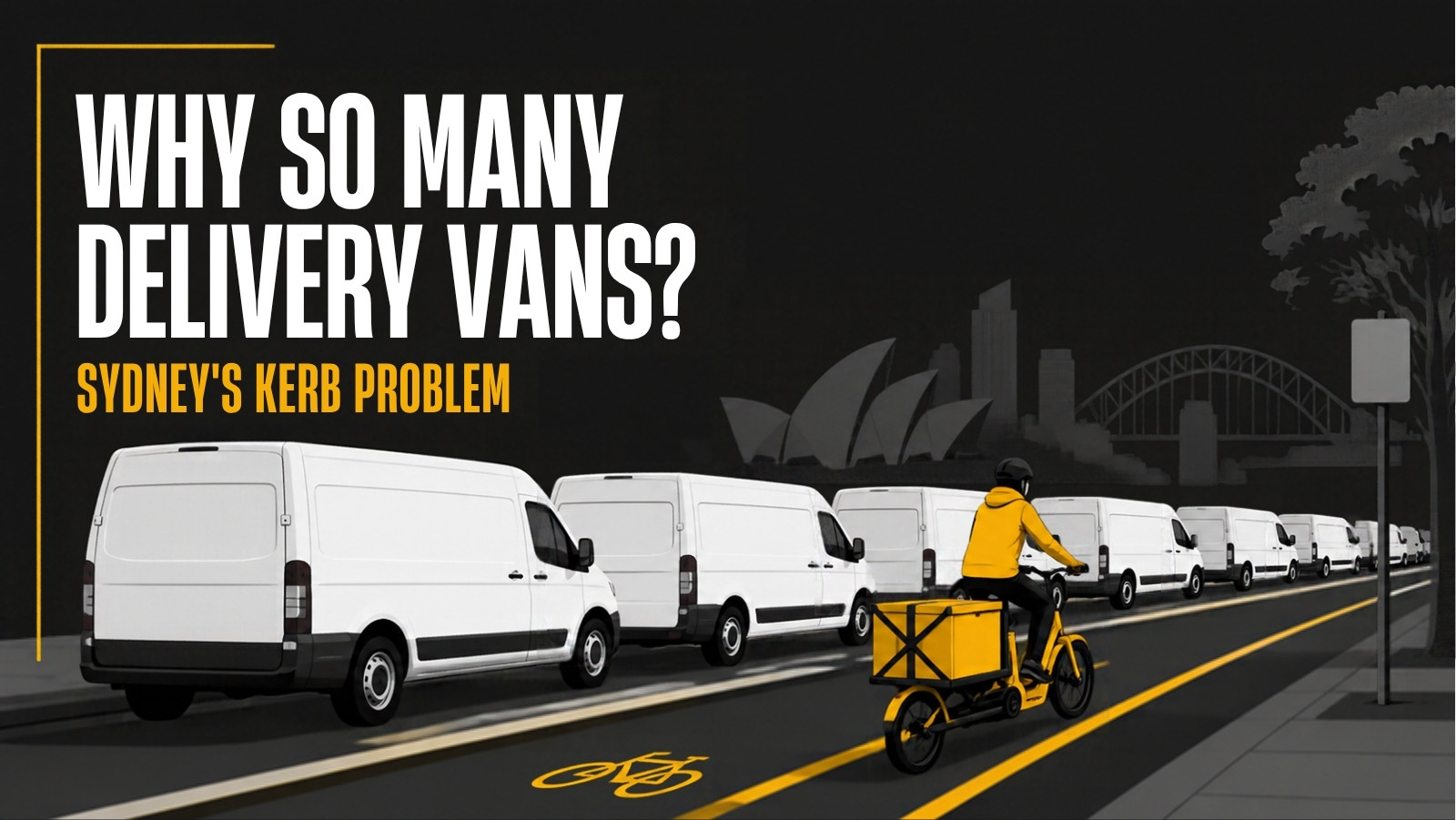
Here’s the kicker: most of those cars are nearly empty. The average Sydney car carries just about 1.35 people (Transport for NSW Household Travel Survey data), so peak hour is really a traffic jam of one-person vehicles, each one taking up the road space of a small room.
Why won’t building more roads fix it?
Because of a well-documented pattern economists call induced demand — the reason building more roads never fixes Sydney’s traffic. The landmark study, the “fundamental law of road congestion” (Duranton and Turner, 2011), found that vehicle travel rises almost one-for-one with new road capacity: add a lane and within a few years it fills with trips that weren’t happening before. Researchers later confirmed the same effect across hundreds of European cities.
Sydney has spent tens of billions widening motorways, and the peak-hour crawl is still here. If new asphalt can’t win, the only durable fix is moving the same number of people using far less road — the thread running through our complete guide to going car-free in Sydney.
How do e-bikes ease Sydney’s congestion?
An e-bike attacks the exact thing congestion is made of: too much space used to move too few people. A rider takes up a fraction of a car’s footprint, doesn’t add to the queue, and replaces precisely the short, single-occupant trips that clog inner-Sydney streets. Every car journey swapped for a ride is one less vehicle in front of you — and one less contribution to that multi-billion-dollar bill.
The trick is a bike that genuinely replaces the car, not just weekend loops. The Cyberbikes Centauro is built for exactly that. Its 250W rear-hub motor is tuned to NSW limits (250W continuous, 25 km/h pedal-assist and a 6 km/h throttle), so it’s fully road-legal under NSW e-bike law. A 48V 25Ah (1200Wh) Samsung battery — UL 2271-certified — covers real commuting distances, while a welded rear rack rated to 50kg plus an optional 15kg front basket (150kg total load) quietly retire the “but I need the car for shopping” excuse.
Not sure it fits your life yet? That’s what rent-to-own is for — ride the route before you buy. Come and talk it through at Cyberbikes, 281 Parramatta Road, Leichhardt.
Frequently Asked Questions
How much does traffic congestion cost Sydney each year?
Around $6.1 billion a year, and BITRE projects between $9.5 billion and $12.6 billion by 2030 — the highest congestion cost of any Australian capital. It’s an “avoidable” cost made up of wasted travel time, unreliable trips, higher vehicle running costs and poorer air quality.
Does building more roads reduce traffic congestion?
Usually not. The “fundamental law of road congestion” (Duranton and Turner, 2011) found vehicle travel rises almost one-for-one with new road capacity, so extra lanes fill up and the jam returns. Cutting the number of car trips is the only lasting fix.
Can e-bikes really reduce congestion in Sydney?
Yes. An e-bike uses a fraction of a car’s road space, and with Sydney’s average car occupancy near 1.35 people, most congestion is single-occupant cars. Swapping short car trips for e-bike trips frees road space straight away.
Swap one car trip a week for an e-bike ride and watch what changes — for your street and your wallet.
#Cyberbikes #EbikeSydney #CarFreeSydney #Leichhardt #UrbanMobility #TrafficCongestion