The difference between a sensored and a sensorless e-bike motor comes down to one thing: how the motor’s controller knows where the spinning part is. A sensored e-bike motor uses tiny Hall-effect sensors inside the motor to track the rotor’s magnets exactly, while a sensorless motor guesses that position from the electricity the motor generates as it turns. In practice, sensored motors give smooth, strong power from a standstill — which is why virtually every quality e-bike, including our Cyberbikes Centauro here in Leichhardt, runs a sensored hub motor.
That one design choice quietly shapes how your bike pulls away from a red light, how it feels on a steep Sydney climb, and even the kind of fault that can leave you stranded. Here is what is actually happening inside the hub, in plain English — and what it means when something goes wrong.
First, what is your motor actually doing?
Almost every e-bike motor — hub or mid-drive — is a three-phase brushless DC (BLDC) motor. Instead of brushes physically switching the current like an old power drill, the electronics do the switching. The controller feeds current into three sets of windings in a rapid, repeating sequence, and that rotating magnetic field drags the rotor’s permanent magnets around with it. Get the timing right and the motor spins smoothly and efficiently. Get it wrong and the motor stutters, wastes energy as heat, or barely turns at all.
So the whole game is timing: the controller has to energise the right winding at the right instant, which means it needs to know exactly where the rotor is at every moment. There are two ways to get that information, and that is the entire sensored-versus-sensorless story. (If you want the deeper picture of how the brain of the system makes these decisions, our guide to how an e-bike motor controller actually works is the natural next read.)
What a Hall sensor does — the “when to fire” part
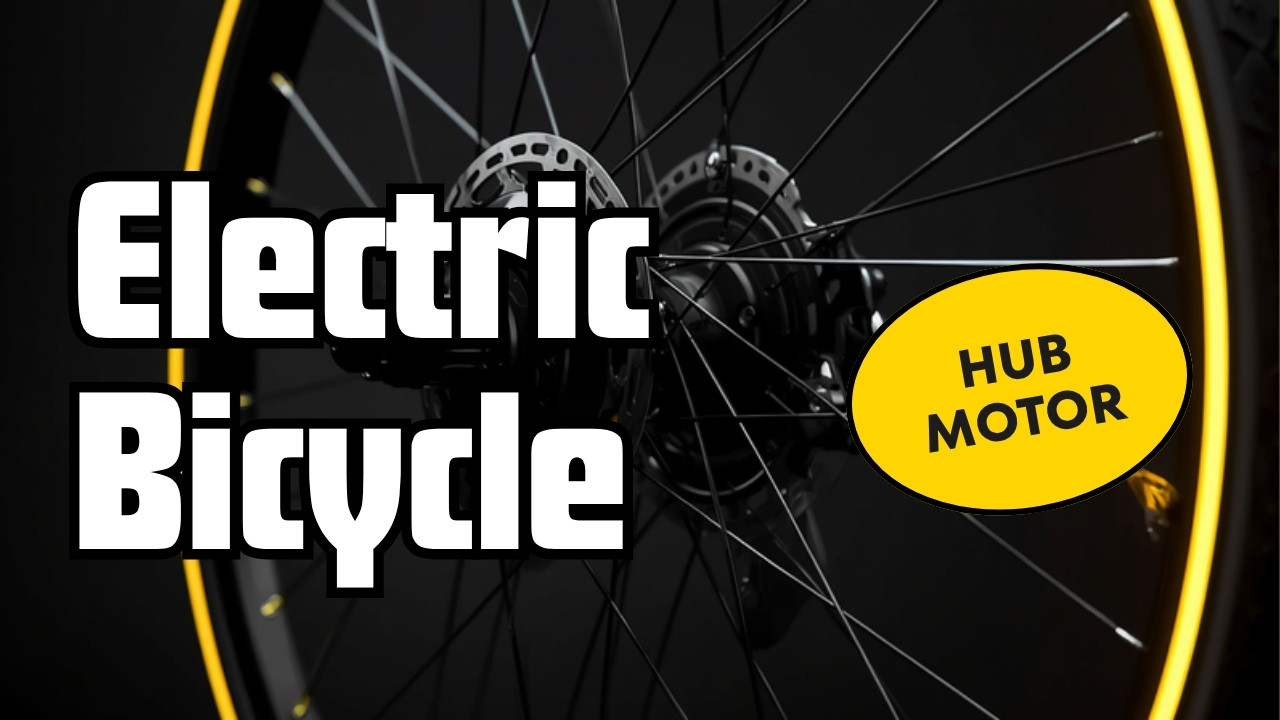
A sensored motor has three Hall-effect sensors tucked inside the motor, spaced around the stator. A Hall sensor is a cheap, reliable little chip that switches on or off when a magnet passes it. As the rotor’s magnets sweep by, the three sensors output a simple digital pattern — a three-bit code — that tells the controller which of six positions the rotor is in during each electrical revolution. Armed with that, the controller always knows which winding to fire next, even when the wheel is dead still.
Why does knowing the exact position matter so much? Because power in a motor is torque multiplied by rotational speed, and the useful torque only appears when the current is switched at precisely the right angle. As the technical team at Grin Technologies explain in their excellent breakdown of motor power ratings, it is torque — not raw watts — that heats a motor up, and that heat rises with the square of the current (the I²R relationship). Sloppy timing means the controller pushes more current for less torque, so the motor runs hotter and less efficiently. Good position data keeps every amp working for you.
Sensored vs sensorless: the real difference
A sensorless motor throws away the Hall sensors and works out rotor position a different way: by measuring back-EMF, the small voltage the spinning magnets induce in whichever winding is momentarily idle. It is elegant and it saves wiring — but there is a catch. Back-EMF is proportional to speed, so at a standstill it is zero, and at very low speed it is too faint to read reliably. A sensorless controller effectively has to give the motor a blind “kick” to get it moving, then start reading position once there is enough speed. That is fine for a fan or a fast-spinning e-scooter wheel, but it feels rough exactly where an e-bike needs to be smoothest: the first metre.
| Sensored motor | Sensorless motor | |
|---|---|---|
| Knows position at 0 km/h | Yes — from Hall sensors | No — needs speed to read back-EMF |
| Starting torque | Strong and smooth from a dead stop | Weak or jerky until it spins up |
| Wiring | More wires (thin Hall cable + phases) | Fewer wires, simpler harness |
| Failure point | Hall sensor or its cable can fail | Nothing extra to fail in the motor |
| Best suited to | E-bikes, cargo bikes, hills, stop-start city riding | High-speed, constant-rpm uses |
Why e-bikes almost always use sensored motors
Think about how you actually ride in Sydney. You stop at lights on Parramatta Road, you pull away on a loaded bike, you grind up the pinch out of a valley in the Inner West. Every one of those moments asks the motor for maximum torque at zero or near-zero speed — the one situation a sensorless motor handles worst. A sensored motor knows precisely where the rotor sits before the wheel has moved a millimetre, so it can deliver clean, confident push from the instant you touch the pedals.
There is an efficiency angle too. Grin’s testing shows a motor becomes less efficient as it slows down under load, dumping more of your battery into heat. Precise Hall-based commutation keeps the motor working properly through that slow, high-load zone, so you climb better and waste less range. Our Cyberbikes Centauro pairs a sensored 250W rear hub motor with a 48V 25Ah (1,200Wh) Samsung battery for exactly this reason — a full-suspension step-through built to haul up to 150kg of rider and cargo needs dependable low-speed grunt, not a motor that hesitates at the lights.
What happens when a Hall sensor fails?
The trade-off for that smooth low-speed power is one more thing that can break. When a Hall sensor dies or, more commonly, its thin signal cable gets pinched, corroded or soaked, the controller suddenly loses track of the rotor. The symptoms are distinctive:
- The motor cogs, stutters or jerks instead of spinning smoothly.
- Power feels weak, notchy, or cuts out under load — often worst from a standstill.
- The display throws a motor or Hall error code.
- A faint grinding or vibrating sensation as the controller mis-fires the windings.
The good news: a Hall fault is usually a wiring problem, not a dead motor. The culprit is often the connector near the axle where water sneaks in, or a cable chafed against the frame. Many controllers can even limp home in a rough sensorless mode if a sensor drops out. A bench test isolates the faulty sensor or cable quickly, and it is a far cheaper fix than a new motor — the kind of diagnosis our workshop does regularly. If your e-bike suddenly develops a stutter, don’t panic and don’t keep forcing it; get it looked at before a minor cable issue becomes a bigger one.
Hall sensor vs torque sensor — not the same thing
This trips people up constantly, so it is worth being crystal clear. A Hall sensor lives inside the motor and measures where the motor’s rotor is — it answers “when do I fire the windings?” A pedal torque sensor sits at the bottom bracket and measures how hard you are pushing the pedals — it answers “how much assist should I give?” They are completely different sensors doing completely different jobs, and a bike can have both. If it is the feel of the assist you are curious about rather than the commutation, our comparison of the torque sensor vs cadence sensor covers that side of the story.
The bigger picture
Understanding what is happening inside the hub takes the mystery — and the fear — out of owning an e-bike. A sensored motor is not something to worry about; it is the reason your ride feels effortless from the very first pedal stroke, year after year.
Frequently asked questions
Are e-bike motors sensored or sensorless?
Almost all quality e-bikes, including the Cyberbikes Centauro’s 250W hub motor, use sensored motors with Hall sensors. They deliver smooth, strong power from a standstill — exactly what you want pulling away on a Sydney hill or at the lights.
What are the symptoms of a failed Hall sensor?
A faulty Hall sensor usually makes the motor cog, stutter, jerk, feel weak or cut out, and often throws a motor or Hall error code on the display. The cause is frequently a damaged sensor cable or a wet connector near the axle, which a technician can test and repair — it rarely means a dead motor.
Is a sensorless e-bike motor better?
Not for most riders. Sensorless motors are simpler with fewer wires to fail, but they struggle to read position at low speed, so they feel jerky pulling away. Sensored motors give the confident low-speed torque everyday commuters and cargo riders in Sydney actually want.
See a sensored motor for yourself in Leichhardt
The best way to feel the difference is to pull away from a standstill on a good sensored hub motor. Come in for a test ride at Cyberbikes, 281 Parramatta Road, Leichhardt, take a look at the Centauro, or ask us about our rent-to-own plans from $99.99/week. Call 0491 794 668 or visit us Tuesday to Saturday.
#Cyberbikes #eBikeSydney #electricBikeLeichhardt #CentauroEbike #eBikeRepairSydney #HubMotor #eBikeTech