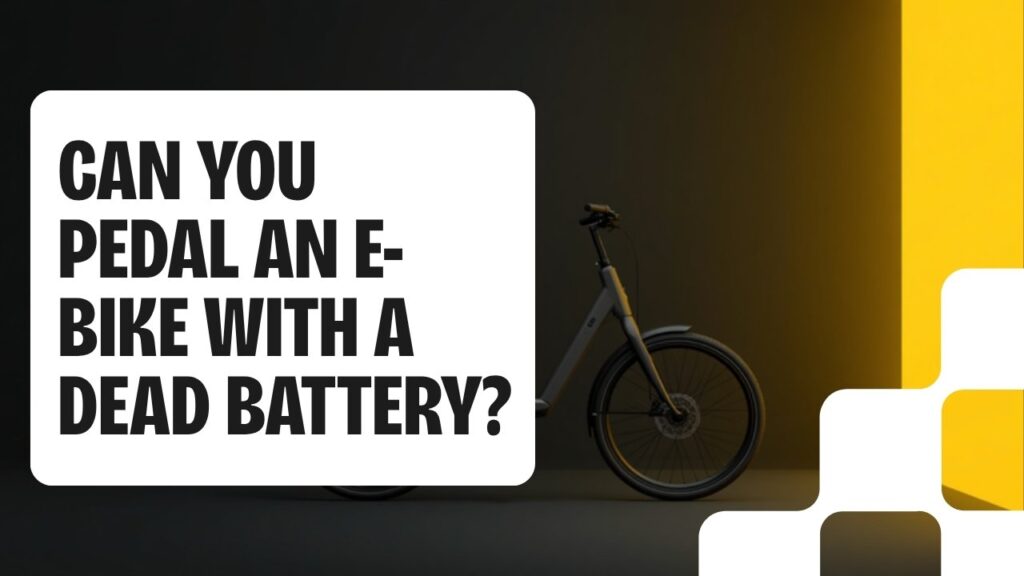
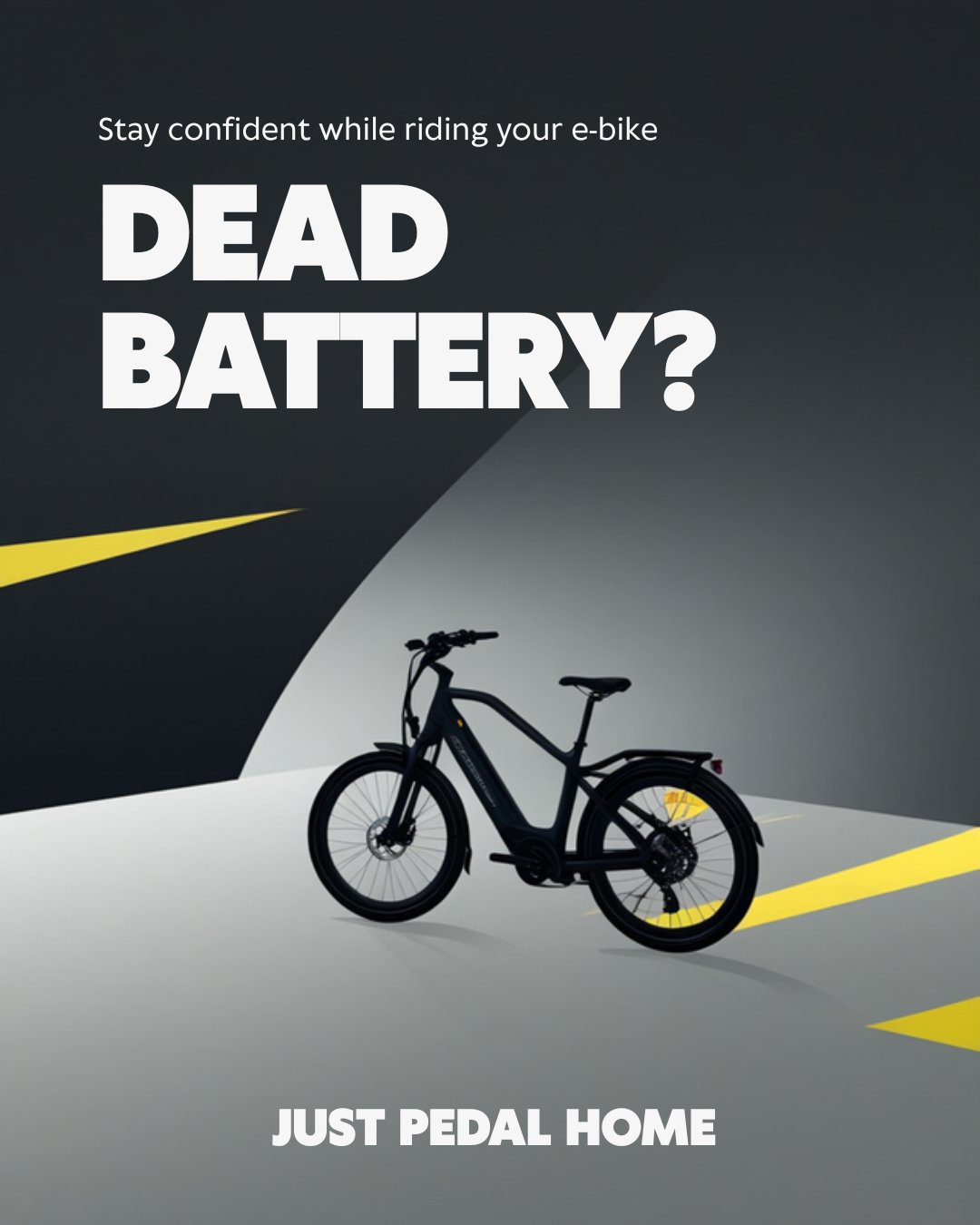
Yes — you can always pedal an e-bike with a dead battery. It simply becomes a heavier-than-normal pushbike, and how hard that feels comes down almost entirely to your motor type. A geared hub motor (like the one on the Cyberbikes Centauro) spins on an internal freewheel and adds barely any drag, while a direct-drive hub motor is magnetically engaged the whole time and does add noticeable resistance. Mid-drive motors don’t drag the wheel at all. So the honest answer for most riders in Sydney is: your battery dying is an inconvenience, not a breakdown.
The short answer, in one table
If you only read one thing, read this. Here’s how the three common e-bike drive systems behave once the power is gone.
| Motor type | Drag when unpowered | Pedalling home? |
|---|---|---|
| Geared hub motor | Very low — internal freewheel disengages the motor | Easy, feels like a heavy bike |
| Direct-drive hub motor | Noticeable — motor is always magnetically engaged | Doable, but you feel constant resistance |
| Mid-drive motor | None at the wheel — you pedal through the normal gears | Easy, but the whole bike is heavier |
Why an e-bike never truly stops working
Every road-legal e-bike in Australia is a pedal-assist bike first. Under NSW rules the motor only tops up your pedalling and cuts out at 25 km/h, so the pedals, chain and gears are fully functional whether the battery reads 100% or 0%. When the battery goes flat, you lose the assist — not the bicycle underneath it.
The thing you actually notice is weight. A battery stores energy measured in watt-hours (Wh = volts × amp-hours), and a bigger pack means more range but more mass. The Centauro’s 48V 25Ah Samsung pack holds 1200Wh, which is a lot of usable range — but it’s also a few extra kilograms sitting on the frame. Add the motor, the sturdier wheels and the heavier-duty components, and a flat e-bike is heavier than the road bike you might picture. That’s the real reason unassisted pedalling feels like harder work, and it matters far more than any drag from the motor itself.
How much drag does a hub motor really add?
This is where motor design makes a genuine difference, and it’s worth understanding before you buy. There are two families of hub motor, and they behave very differently with the power off. If you want the deeper mechanical breakdown, our guide to geared versus direct-drive hub motors goes further.
Geared hub motors freewheel
Almost every geared hub motor has an internal freewheel (a one-way clutch) built into it. As Grin Technologies’ engineers at ebikes.ca put it, that freewheel means “there is very little rolling friction to spin the wheel when you are not using the motor.” In plain terms: when you stop drawing power, the internal gears disconnect and the wheel spins nearly as freely as a normal bike wheel. The trade-off is that a freewheeling geared hub can’t do regenerative braking — but for pedalling home on a dead battery, it’s exactly what you want. The Centauro uses a 250W geared rear hub for this reason.
Direct-drive hub motors are always engaged
A direct-drive hub has no gears and no clutch — the wheel is the motor. That makes it silent, durable and capable of regen, but it’s “always mechanically engaged,” so you’re constantly overcoming the motor’s magnetic cogging even when it’s off. ebikes.ca describes this drag as ranging “from imperceptible to feeling like you are always riding with a flat,” depending on the motor’s quality. The cogging torque is typically between 0.3 and 1 newton-metre and grows with speed. You can still pedal a dead direct-drive e-bike home — plenty of people do — you’ll just feel that resistance the whole way.
What about mid-drive motors?
A mid-drive motor sits at the cranks and pushes its power through your chain and gears rather than through the wheel. When it’s switched off, the wheel itself has no motor drag at all — you’re just pedalling a normal drivetrain. The catch is the same as always: the bike is heavier, and every watt you put in still runs through the chain.
There’s a subtler point here that ebikes.ca makes well. A hub motor gives you “independent propulsion” — the motor and the human drivetrain are separate systems. If a chain snaps or a derailleur jams, a hub motor can still get you home, and if the battery dies, the pedals still work through the same chain. On a mid-drive, anything that takes out the chain takes out both the motor and your pedalling at once. Neither is wrong — it’s just a design trade-off worth knowing when you choose a bike.
Does pedalling recharge a dead e-bike battery?
Mostly, no — and this is the myth we bust most often at the shop. Geared hub and mid-drive motors physically can’t send energy back to the battery, because the freewheel or drivetrain disconnects the motor when you’re not driving it. Only a direct-drive hub can do regenerative braking, and even then it recaptures energy while you brake or descend, not from ordinary pedalling on the flat. The gains are real but small — useful for saving your brake pads on long descents, not for refilling a flat pack. If you want the full picture, read how regenerative braking actually works. To understand where all these pieces fit together, our overview of how e-bikes actually work — motors, sensors and controllers ties it all up.
How far can you pedal a dead e-bike home in Sydney?
Realistically, further than you’d think. On the flat and flattish routes most Sydney commuters ride — the Bay Run, Parramatta Road’s back streets, the inner-west cycleways — a fit rider can comfortably pedal a flat geared-hub or mid-drive e-bike several kilometres home. A few practical tips: drop into a lower gear before you stop so you’re not grinding away from the lights, keep your tyres properly inflated (soft tyres add far more drag than any motor), and plan a flatter route back if you can. Steep climbs are where the weight bites, so avoid the big hills if your battery’s flagging.
Watch: buy the engineering, not the marketing
Choosing a motor you can live with — including on the day the battery runs flat — is really about buying good engineering rather than a spec sheet. Here’s our take from the Cyberbikes AU channel:
The Cyberbikes take
We build and sell bikes for real Sydney conditions, so a dead battery should never leave you stranded. The Centauro’s 250W geared rear hub freewheels cleanly, so if you run the 1200Wh pack down on a long day out, you can still pedal it home like a heavy commuter — no drama. It’s a full-suspension step-through with a 150kg load rating, built to keep going. If you’re weighing up which drive system suits your ride, come and feel the difference for yourself at Cyberbikes in Leichhardt.
Frequently Asked Questions
Can you ride an e-bike like a normal bike?
Yes. Every road-legal e-bike in NSW is pedal-assist, so you can ride it with the motor off or the battery flat exactly like a regular bicycle. It’ll just feel heavier because of the motor and battery.
Is it hard to pedal an e-bike without the battery?
Not especially, on flat ground. The main factor is the bike’s extra weight, not the motor. Geared hub and mid-drive e-bikes freewheel normally, so the biggest effort is simply moving a heavier bike — noticeable on hills, easy on the flat.
Does a hub motor slow you down when the power is off?
A geared hub motor adds almost no drag because it freewheels. A direct-drive hub motor is always engaged and adds a small, constant resistance — described by ebikes.ca as anywhere from imperceptible to like riding with a slightly flat tyre.
Battery flat or not, we’ll keep you rolling. Browse our e-bikes at cyberbikes.com, or come in for a test ride at Cyberbikes, 281 Parramatta Road, Leichhardt. Ask about our rent-to-own plans — from $99.99/week.
#Cyberbikes #eBikeSydney #ElectricBikeLeichhardt #CentauroEbike #HubMotor #eBikeTech